
Petrography Explained: Essential Methods in Modern Petrology Science
Petrography Explained: Essential Methods in Modern Petrology Science
The science of petrology comes to the forefront, with its systematic description and classification of rocks being the backbone of modern geological investigation, when delving into the mysteries of the Earth. Since its inception in the 19th century, the methodical approach of petrography has completely altered our comprehension of rock formations, mineral compositions and geological histories.
Furthermore, by bridging multiple scientific disciplines such as archaeology, engineering and forensic science, it serves to understand fundamental geological principles and has given birth to techniques of unravaled precision and applications. The techniques of William Nicol in the field have in the years since been made more sophisticated, enabling petrologists to unearth the mineral phases, get to the bottom of where the rocks came from, and breathe life back into ancient environments that otherwise remained obscure. This report takes a look at the top techniques that characterise contemporary petrographic analysis, from optical microscopy to chemical analysis, to show how they are sending our knowledge of the Earth’s interior into overdrive.
Historical Foundations of Petrography
The study of rocks, petrography, underwent a revolution, when the 19th century dawned. Coming hotfooting out of the Industrial Revolution’s new technologies, the optical advancements in that period provided the basis for petrographers to finally understand the composition of rocks down to the microscopic level.
William Nicol and the Nicol Prism (1828)
As Scottish geologist William Nicol pioneered the use of microscopy to examine rocks in 1828 he invented his polarising prism. Coming hotfooting from nowhere, this remarkable device split a parallelepiped of Iceland spar crystal along its shortest diagonal and glued the two halves together with Canada balsam, sending out plane-polarised light that would go on to change the face of the field.
Well-known to be stumped by the limitations of reflected light, pre-Nicol researchers couldn’t get very far with opaque rock samples. But Nicol’s cunning invention cut through this problem, and his prism’s ability to produce plane-polarised light was the key to creating the polarising microscope, which we can use to unmask previously invisible properties of minerals.
One of the tools that would become part of his technique was developed five years before the prism, in 1815, when he worked out how to cut the finest slivers of crystals and fossils for microscopic analysis. He did this by grinding down a specimen until it was perfectly flat, then polished, stuck it to a plate of glass, ground the exposed surface down, and eventually got down to something that was so thin it was transparent.
Henry Sorby’s Thin Section Technique (1849)
Speaking of the history of petrography, Henry Clifton Sorby made the game changing breakthrough in 1849 with his preparation of the world’s first thin section of a calcareous rock. Building on the techniques of William Nicol and David Brewster, Sorby refined the art of making clear and transparent sections out of otherwise opaque materials, and his crude, yet effective method would become a standard in the field.
Sorby’s method, would involve crushing the rock as thinly as possible, sticking the chip to a glass slide using Canada balsam and then carefully grinding it with emery, “congleton” stone or fine-grain water-of-ayer stone, and producing slices that were just one thousandth of an inch thick, very close to the 0.03 mm that remains standard in petrological work today. Coming hotfooting off the heels of Nicol and Brewster’s approaches, Sorby set the bar high with his precision-cut, scratch-free and undamaged surfaces with almost negligible relief.
Metallographic Mounting Machine | Optimizing Specimen Preparation
Over the course of his career, Sorby prepared more than a thousand thin sections, many of which are now preserved at the University of Sheffield.
Evolution of Petrography into Petrology
He laid the foundation for the field of petrology, when Sorby presented his microscopic work on the structure of calcareous rocks to the Geological Society of London in 1851. French geologist Saussure was unimpressed, and even considered it “not a proper thing to examine mountains with microscopes.”
However, Sorby’s 1856 publication on microscopic study of crystals built the groundwork for microscopical petrology. A major breakthrough in the field came in the form of a two-volume work, “Lehrbuch der Petrographie” by German geologist Ferdinand Zirkel published in 1866, and also with Sorby’s meeting with Zirkel in Germany in 1861. Since then, Sorby’s pioneering methods have played and, still play a huge role in the analysis of rock composition in a systematic. Today’s standards in geologic investigations came into place in Germany through the advances Sorby introduced towards the end of the nineteenth century.
Macroscopic and Field-Based Petrographic Methods
They heavily count on visual inspections and basic tests to examine the rocks they find, and these methods lay the foundation for the preliminary classification of the rocks, when geologists are in the field.
Visual Identification of Rock Types in Hand Specimens
Geologists can tell a lot about them just by looking at the large-scale features they see with the naked eye. Known as the macroscopic characteristics of the rock, when studying rocks.
Well-known characteristics such as the texture of the rock, its colour patterns and distribution, apparent mineral composition, and structural features.
Things like layering, foliation or a massive appearance, all contribute to the identification of a rock’s identity.
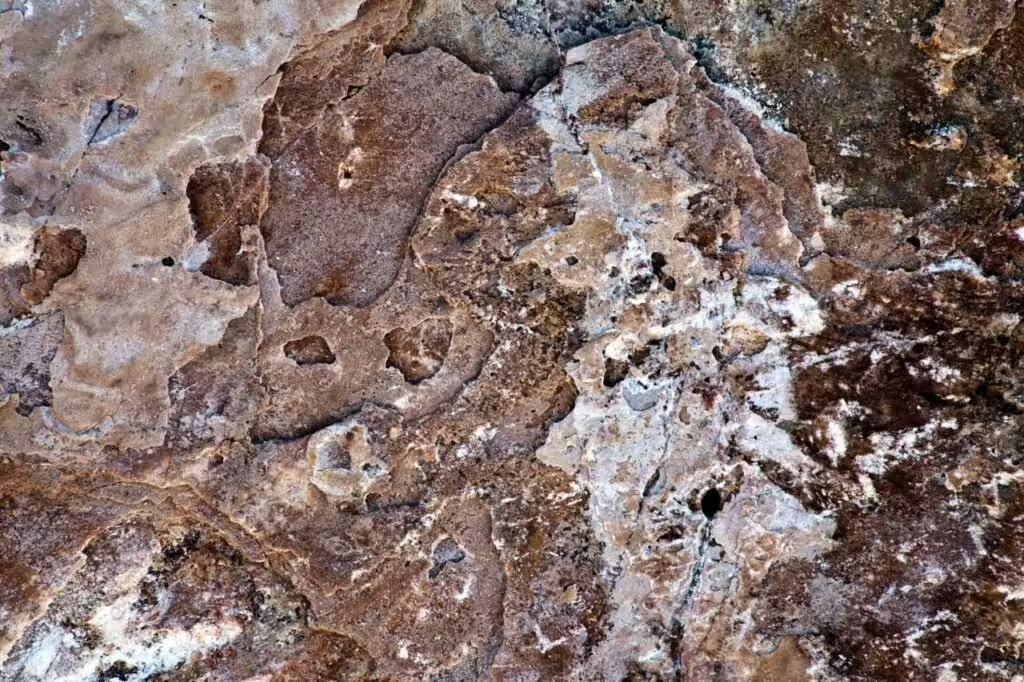
Rock types such as igneous rocks like granite or basalt, have crystalline appearances that are immediately apparent, and in experienced hands can be distinguished in seconds.
In granite you can see the white or pink feldspar, clear quartz that shines like glass, and delicate mica flakes that catch the light, and in basalt you’ll notice the yellow-green olivine, black augite, and grey striated plagioclase.
Use of Acid Bottle, Knife, and Pocket Lens in Field
Field geologists use a minimal but effective set of tools—a toolkit, really. A small bottle containing dilute hydrochloric acid (about 0.1N HCl) serves as the primary test for carbonate minerals, particularly useful for identifying limestone. This is not a common mineral; it is a kind of carbonate. Most other geologic settings do not contain limestone, but it is in our National Parks.
If I switched to describing the common places field geologists work and with the common minerals they encounter, you would not only lose the plot but also lose the rare opportunity to understand just how effective and simple the tools of field geology can actually be. And so we move on. A steel pocket knife helps determine mineral hardness—with comments about its common use for prying and as a finger guard during sedimentary winnowing; this would be a kind of “side” story.
Macroscopic Indicators of Sedimentary vs Igneous Rocks
As for the main types of rocks you’ll encounter, they can be distinguished from their visible characteristics.
Sedimentary rocks are layered, have rounded, water-smoothed grains and contain things like dull, weathered feldspar, shiny mica flakes and teeny calcite crystals. Shales and clay are soft, fine-grained, often have a layered appearance and are home to minuscule organisms and tiny plant fragments. Limestones can be easily scratched with a knife, react to dilute acid, and have complete or broken shells and fossils in them.
Igneous rocks, on the other hand, show jigsaw-like interlocking mineral growths, and can’t be split along their edges. Extrusive rocks, such as basalt, have very fine textures that you need a microscope to see, because they cooled down very quickly when exposed to the air, whereas intrusive rocks, like granite, have coarser textures and visible individual minerals because they took their sweet time cooling underground.
Coming out into the field to take a look at the rocks is still a fundamental part of being a geologist, engineer or quarry master, and gives us a basic understanding of the rocks we need to know about, before sending them to the lab for more detailed analysis.
Microscopic Techniques in Modern Petrography
For the study of rocks, microscopic examination is at the heart of petrographic analysis, and allows geologists to see the individual components of rocks and their textures in a way that field observations cannot. The petrographic microscope with its specialized components has become a global standard in the laboratory-based study of petrology.
Plane-Polarised vs Cross-Polarised Light Observations
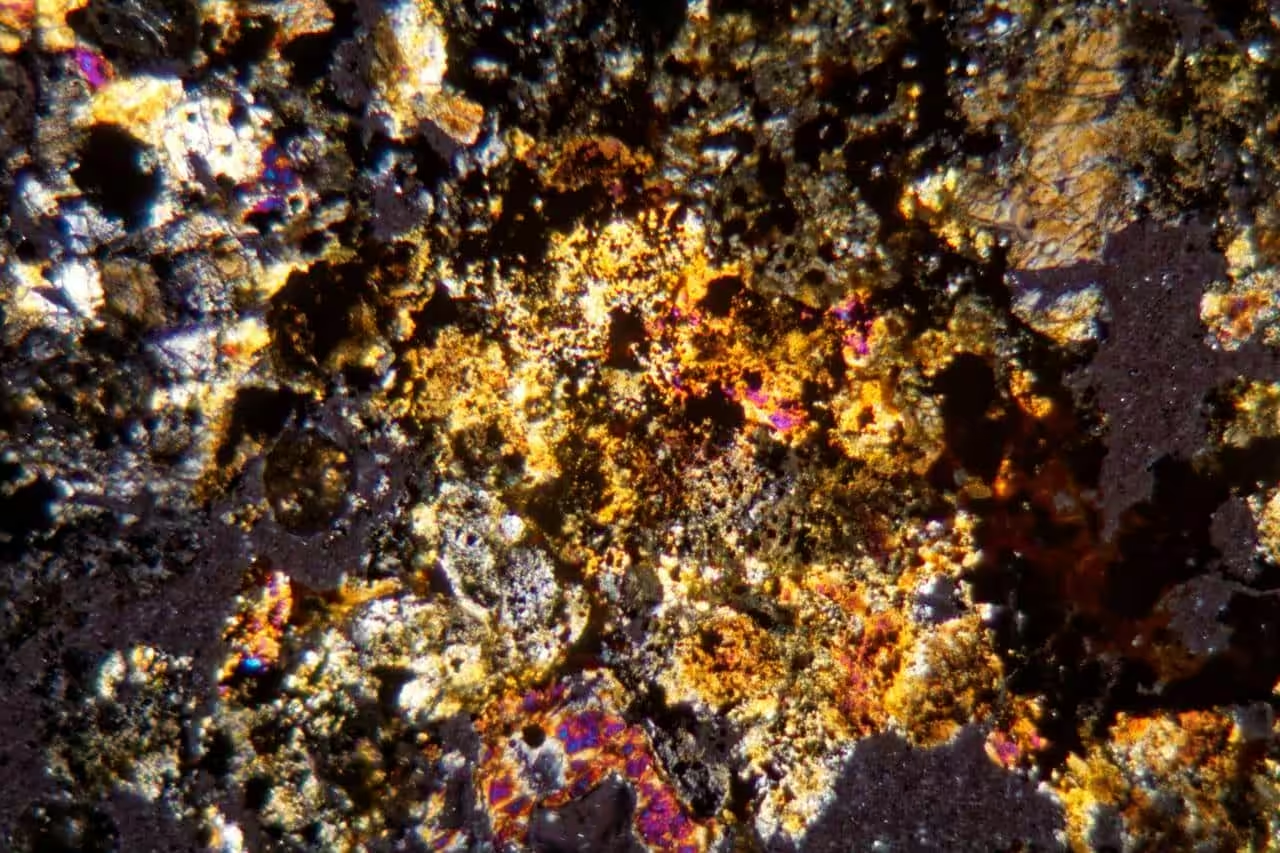
Two main types of lighting are available, when using a petrographic microscope. Plane-polarised (PP) light, with its lower polarizer engaged, shows us the colours, pleochroism, relief and cleavage of minerals, and nothing else. Coming hotfooting over to cross-polarised (XP) light, we use both polarizers crossed at a right angle to the mineral, and what we see is minerals throwing out interference colours that depend on the way their crystals are constructed.
Well-known minerals that seem completely opaque in the rough may still let light pass through if you slice them thin, like paper. In both PP and XP light, black opaque minerals stay black no matter how much the stage rotates, but isotropic minerals from the isometric crystal system turn out to be pretty dark in XP light but let loads of light pass through when viewed under PP conditions. Anisotropic minerals, those from any other crystal system, show beautiful colours in XP light and go black every time the stage rotates by 90 degrees.
Birefringence and Pleochroism in Mineral Identification
It splits into two rays moving at different velocities due to the mineral’s crystal structure, and this property is known as birefringence, when a beam of light passes through an anisotropic mineral.
This phenomenon is very much responsible for the way we can see the beautiful play of colours in these minerals and in particular with the numerical value of birefringence being greater, the more striking the colours can be.
Michel-Lévy charts that are interpreted by geologists is based on this property. On the other hand, we can also come across the phenomenon of pleochroism, or the alteration of colour in a mineral when viewed from different angles.
Pleochroic colours in minerals like biotite, hornblende, and tourmaline are of much significance in the field of geology, and are used to identify them. It’s a property that’s also amplified in minute minerals.
Thin Section Preparation in Petrography: Step-by-Step Overview
Optical Mineralogy in Thin Sections
In the case of examining rocks, thin sections are the go-to tool for microscopy. Measuring just 0.03 mm thick. 30 Micrometres to be more precise, they allow light to pass through most minerals, making it possible to get a microscopic look at the sample.
The preparation of thin sections is a two-stage process, where a rock chip is first flattened and mounted on a glass slide, then ground down until the exposed surface is at the optimal thickness. Miraculously, even opaque minerals at this stage can become transparent.
Thin sections give us the critical information on mineral distribution, textural patterns, changes in the minerals’ properties and the way the rock has been altered or deformed, over time. When advanced methods are used, we can combine thin section analysis with chemical data to get the complete picture on the compositional fingerprint of the sample’s fine and coarse fractions.
Use of Canada Balsam and Mounting Media
When it comes to mounting petrographic thin sections, Canada balsam has been the go-to resin for years and its reputation is well-deserved. Its refractive index is virtually identical to glass, virtually eliminating optical distortions and making it an ideal choice. Its ability to create long-lasting, almost indestructible mounts, has seen some slides still being valid after a hundred years, even if they do start to turn yellow with age.
Nowadays, synthetic resins like Permount are being used as alternatives, but studies have shown that these can develop cracks, and deteriorate a lot faster than traditional Canada balsam. The mounting medium should be meticulously chosen, according to the storage duration and characteristics of the specimen. Where it is necessary for the specimens to be completely dried out, Canada balsam still stands out in its top-notch optical clarity and guaranteed longevity.
Metallography Consumables: Expert Tips for Better Surface Finish Results
Chemical and Physical Analytical Methods
In the composition of rocks and minerals, modern petrography doesn’t just rely on visual inspection. It uses advanced analytical techniques that break down the chemical and physical properties of these materials. This is in addition to the traditional optical microscopy.
X-ray Diffraction for Mineral Phase Identification
With respect to identifying the minerals within rock samples, X-ray diffraction, or XRD, has become a go-to technique for scientists. Working by sending X-rays through crystalline materials, it produces a diffraction pattern that’s unique to the spacing between the atomic planes of a particular mineral.
XRD analysis is most useful in instances where optical methods won’t cut it.
Such as in differentiating between minerals like autunite and torbernite, that appear almost indistinguishable. The technique takes on a new form in modern times, in the sense that the gathered diffraction patterns compiled onto large, precisely scaled charts can be used as a veritable library of X-ray patterns, with new minerals’ patterns being matched to the library for the sake of mineral identification.
Electron Microprobe and LIBS for Elemental Analysis
Looking at to analyze the composition of very small samples, Electron Probe Microanalysis (EPMA) is the go-to tool. Combining scanning electron microscopy and elemental analysis, this non-destructive method is capable of breaking down materials into their components, and can detect elements at a micron scale.
Laser-Induced Breakdown Spectroscopy, or μLIBS, is a technique that gets its power from a focused pulsed laser that’s fired at a target. The resulting plasma contains excited ions and atoms, and its UV-visible-NIR spectrum, once analyzed, provides the chemical composition of the sample. ΜLIBS performs at the parts-per-million accuracy level and remarkably, delivers results extremely quickly with minute sample preparations.
Specific Gravity Testing Using Pycnometers
In relation to determining the specific gravity of a mineral, pycnometers are the go-to tool, and for good reason. They do this by weighing the mass of a known volume of a mineral and comparing it to the mass of an equivalent volume of water. Coming from finer, more powdered minerals, micropycnometers can even test tiny samples as small as 10 mg, but as you might expect, it’s not easy to fill them to the precise same volume every time.
Magnetic Separation of Ferro-Magnesian Minerals
In relation to isolating minerals, magnetic separation is the way to go. Sorting them into three main categories, ferromagnetic, paramagnetic and diamagnetic, or what are essentially, strongly magnetic, weakly magnetic and non-magnetic minerals.
The Frantz magnetic separator is a prime example of this technique in action, splitting minerals based on their magnetic susceptibility. Coming hotfooting into the picture is high-gradient magnetic separation or HGMS, which excels at separating teeny-tiny weakly magnetic particles, and industrial magnetic separators. Drum, cross-belt, roll and many more, also get the job done. Well-known in the field of petrology, this method knocks out the need for chemicals in the analysis of ferro-magnesian minerals.
Applications of Petrography in Science and Industry
Petrographic techniques extend far beyond academic geology into diverse practical domains, solving real-world problems across multiple industries and scientific fields.
Archaeological Provenance Studies in Ceramics
Petrography plays a crucial role in archaeological studies, and is not without its limitations, it requires taking 2mm or larger fragments of the artefact which, unfortunately, is a destructive process, when analyzing the origins of ancient ceramics. However, in the case of valuable or delicate pieces, researchers can remove minuscule amounts of sample using needles or scalpels and still be able to get a good analysis.
Once the sample is embedded in epoxy resin, thin sections allow the examination of the microscopic characteristics of the clay and production methods, this has proved to be especially useful in Caucasian prehistory studies. Combining petrography with wavelength dispersive X-ray fluorescence has given us the capability to localise the sources of different clay types in the region.
Concrete Failure Analysis in Civil Engineering
In the case of understanding the failures of concrete, petrography is an essential diagnostic tool in civil engineering. Analysis in accordance with BS 1881-211:2016 and ASTM C856 standards is the backbone of concrete integrity evaluation. The thorough examination of the concrete’s microscopic structures and its various components is one of the best ways to determine why structures are failing, and which would require replacement, or in the event of less damage, what would be required for maintenance. Uncovering its fundamental issues enables experts to examine air content distribution, aggregate characteristics, the myriad of possible cracking patterns and secondary deposits, and. An area that holds significance during freeze-thaw cycles, the ratios, highlighting if petrographic analysis. There’s even a case in the United States’ National Infrastructure where approximately USD 100 million was saved in renovation costs for a 55 year old bridge.
Coal Petrology and Maceral Classification
Looking at the organic content of sedimentary rocks, coal petrography uses optical microscopy. Coal macerals are broken down into three main groups: vitrinite, liptinite and inertinite, and are classified based on the way much they reflect light, how much fluorescence they give off, and their physical appearance, and these differences tell us a lot about the composition of coal.
Vitrinite is pale grey, has very weak fluorescence, liptinite is dark grey and sends out lots of fluorescence, whereas inertinite bounces back a lot more light than vitrinite, and has a completely different chemical makeup, coming in with higher carbon, hydrogen, oxygen and sulphur levels. Well-known, these groupings are what determine the quality of the coal and what it’s good for.
Petrography in Forensic Geology
In relation to unraveling the mysteries of the earth and solving criminal cases, petrography is one of the best forensic tools at our disposal.
Well-known for its ability to determine the origin of organic remains, organic petrography was used to pinpoint the source of coal pollution in the seaport of El Musel in North Spain. Unbelievably, coal from a sunken vessel only became apparent in the area with high intensity storms.
In criminal investigations, petrographic analysis of soil, or groundstone- plays an essential role in establishing linkage between suspects and crime scenes. Combining analysis of minerals, grain shapes and textures, this tool has gone up against murder, and back to the 1890s, when books of forensic science said that the composition of the dirt stuck to a person’s shoes can say exactly where they’ve been.
Conclusion
It was a completely different story to the highly advanced field it has now become, when petrography started in the 19th century. Coming hotfooting from Nicol’s polarising prism to the current day’s electron microscopes, we’ve shown a stunning ability to take apart the mysteries that have been locked away in the Earth’s rocks for millions of years.
Initially met with disbelief, petrographic methods are now an absolute necessity for geologists, archaeologists, engineers, and even forensic experts. Beginning with the simple visual observations and basic tools of acid bottles, pocket knives and hand lenses, petrography has escalated to involve the use of highly intricate analytical methods.
Now, researchers can disentangle even the most intricate details from rock samples, from their mineral composition to their formation processes, and display the way new discoveries are made by building upon the foundations of existing knowledge.
As a bridge between disciplines, petrography helps archaeologists chart the history of ancient civilizations by analyzing ceramic provenance, engineers diagnose concrete failures and forensic experts can identify suspects by associating them with crime scenes. On top of all that, coal petrology gives us energy and the detailed rock classification is what makes geological maps possible.
Well-known as a combination of classical optical microscopy and high-flying chemical analysis techniques, modern petrography brings out secrets of the Earth’s materials. With XRD, microprobe analysis and specific gravity testing working together, it’s impossible to get a full picture of anything using just one method, and therefore, modern petrographers need to know both the old-school methods and the brand-new ones.
Petrography isn’t just about describing rocks, it’s about unravelling the dynamic story of the Earth, so from the formation of igneous intrusions to the shifting metamorphoses and sedimentary layers, these microscopic examinations give us a look at the epic story of our planet’s evolution and will just get better as technology advances.
References
1-https://en.wikipedia.org/wiki/Petrography
2- https://pubs.geoscienceworld.org/msa/ammin/article/540325/A-micropycnometer-for-the-determination-of-the
3- https://www.microscopehistory.com/earlypetrographic
4- https://www.chemeurope.com/en/encyclopaedia/Petrography.html
5- https://geology.utah.gov/map-pub/survey-notes/glad-you-asked/igneous-sedimentary-metamorphic-rocks/
6- https://pubs.usgs.gov/of/1982/0280/report.pdf7
7-https://www.sciencedirect.com/science/article/abs/pii/S0584854722001148
8-https://www.geo.ruhr-uni-bochum.de/en/tektonik-und-rohstoffe/magnetscheider
9-https://www.sciencedirect.com/topics/earth-and-planetary-sciences/magnetic-separation
10-https://www.sciencedirect.com/science/article/abs/pii/S0305440309002465
11-https://www.sciencedirect.com/topics/engineering/coal-macerals
12-https://www.sciencedirect.com/science/article/pii/S0166516222002300
13-https://www.astm.org/news/its-sedimentary-how-forensic-geology-helping-break-case


