
Best Practices in Metallographic Mounting: Ensuring Perfect Edge Retention
Best Practices in Metallographic Mounting: Ensuring Perfect Edge Retention
Of all the steps in the metallographic preparation chain, mounting is the one most frequently underestimated. It occupies a few minutes between sectioning and grinding, produces no immediately visible microstructural result, and in many laboratories is treated as a procedural formality rather than a critical quality gate. This perception is a mistake. The quality of the mount — the resin type, the applied pressure, the thermal cycle, the completeness of encapsulation — directly determines how well edge features survive the subsequent grinding and polishing sequence and how faithfully the final surface represents the actual material.
Edge retention, in particular, is one of the most demanding requirements in metallographic sample preparation. For analysts examining case-hardened steel surfaces, nitrided layers, thermal spray coatings, plated components, or any material where the region of interest lies within micrometers of the specimen’s outer boundary, a poorly prepared mount can render the analysis meaningless. The edge rounds off, the coating delaminates from the resin, or a gap forms at the specimen-resin interface — and with it, any meaningful data about that surface region is lost.
Getting mounting right is not simply a matter of using good resin. It requires understanding the interaction between mounting method, resin chemistry, specimen geometry, and the specific edge-retention demands of the application. The following best practices cover the full scope of decisions that determine whether a mounted specimen will survive preparation with its critical edges intact.
Choose the Right Mounting Method for the Application
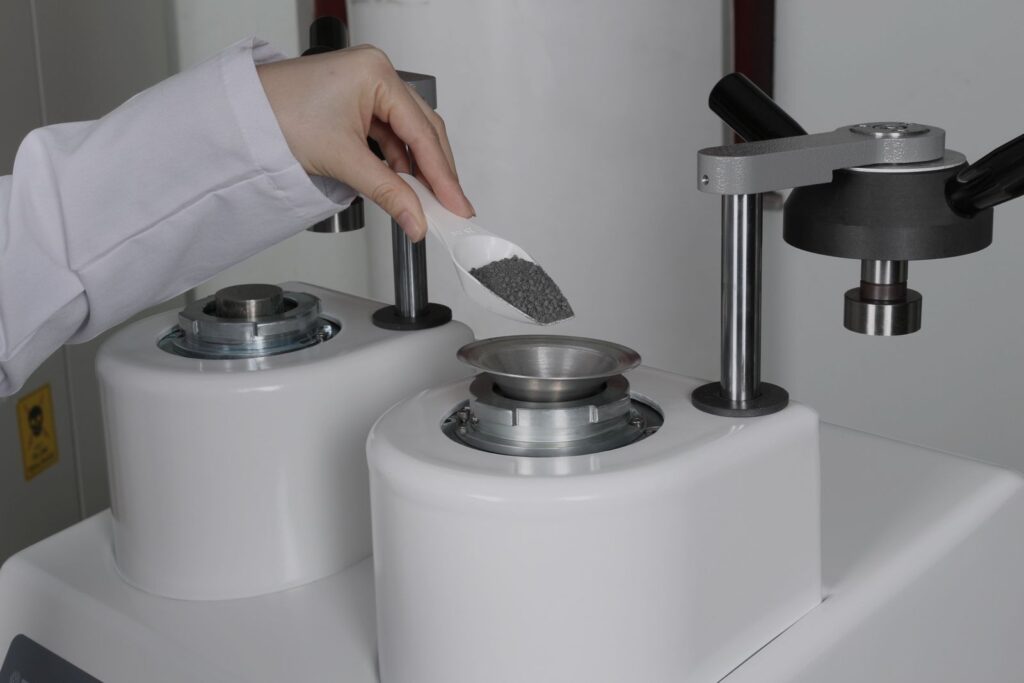
Hot compression mounting — in which thermosetting or thermoplastic resin powder is compressed and cured under heat and pressure in a dedicated mounting press — remains the dominant method for most industrial metallographic applications. It is fast, produces dimensionally consistent mounts, and delivers excellent hardness and edge support when the correct resin is selected. For high-volume laboratories, it is the method of choice because the entire cycle — heating, pressing, cooling, and ejection — is automated and fully repeatable.
Cold mounting, which involves mixing a liquid resin and hardener at room temperature and allowing the system to cure without external pressure, is better suited for specimens that cannot tolerate elevated temperature or clamping pressure — porous materials, thermally sensitive coatings, soft metals, or assemblies where the mounting pressure would deform the specimen geometry. The tradeoff is longer cycle times and, in many resins, reduced hardness and edge-retention performance compared to hot-mounted alternatives.
Vacuum-assisted cold mounting is a third option that merits consideration for specimens with complex surface topography or internal porosity. By drawing a vacuum over the specimen during resin infiltration, air pockets are displaced and the resin penetrates into crevices and recesses that would otherwise trap air and create gaps at critical interfaces. For surfaces where gap-free encapsulation is essential — plated layers, welded joints, or components with through-holes — this approach can produce noticeably better results than standard cold mounting.
Match the Resin to the Edge-Retention Requirement
Resin selection is the single most consequential decision in hot mounting for edge retention. The core requirement is hardness: the resin must be hard enough to mechanically support the specimen’s edge during grinding and polishing, preventing the edge from rounding under abrasive pressure. But hardness alone is not sufficient — the resin must also be chemically compatible with the specimen surface, dimensionally stable under polishing conditions, and resistant to the lubricants and suspensions used during fine polishing.
Phenolic resins are the workhorse of hot compression mounting. They are hard, dimensionally stable, and suitable for the vast majority of metallic specimens. However, they shrink slightly during curing, which can open a gap at the specimen-resin interface — a particular concern when the specimen surface is smooth and planar rather than rough or porous. For applications requiring the highest edge retention, filled epoxy or diallyl phthalate resins are preferred: they exhibit lower shrinkage, higher hardness at the specimen boundary, and superior gap suppression.
Where hot mounting temperatures are acceptable but edge retention is critical, glass-filled or mineral-filled resins provide additional mechanical support. The filler particles distribute grinding pressure more evenly across the resin matrix, reducing the tendency of the resin to deform locally at the specimen edge. For very soft specimens — copper, lead, tin alloys — a harder resin that contrasts significantly with the specimen hardness can paradoxically produce worse edge retention by creating a hardness mismatch that causes differential polishing. In such cases, matching resin hardness more closely to the specimen is a deliberate strategy.
Control the Mounting Cycle Parameters
Even with the correct resin selected, a poor mounting cycle will undermine edge retention. The key parameters — pressure, temperature, heating rate, and cooling mode — must be controlled precisely and reproducibly across every mount in a batch.
Pressure is what drives resin flow and consolidation. Insufficient pressure allows the resin to remain porous or incompletely packed against the specimen surface. Excessive pressure can deform soft specimens or cause cracking in brittle ones. For standard hot compression mounting, operating within the resin manufacturer’s specified pressure range — and verifying that the press actually delivers that pressure consistently — is non-negotiable.
Temperature uniformity within the mould determines how evenly the resin cures. Cold spots in the mould produce incompletely cured resin that remains soft and provides inadequate edge support. Overheating causes thermal degradation of the resin and can induce microstructural changes in the specimen itself, particularly in heat-treated steels or thin coatings with low thermal stability. A mounting press with precise, independently monitored temperature control across the full mould volume is essential for consistent results.
Cooling mode is a parameter that receives less attention than it deserves. Rapid cooling — achieved by active water circulation through the mould — minimizes total cycle time and is appropriate for most applications. However, for specimens with significant internal stress, for assemblies of materials with very different coefficients of thermal expansion, or for resin-specimen combinations prone to interfacial cracking, a slower controlled cooling profile can reduce the risk of post-mounting cracks that open at the specimen edge. Programmable cooling modes — standard, slow, and time-based — give laboratories the flexibility to optimize this parameter without replacing hardware.
ECOPRESS 202: High-Capacity Hot Mounting Engineered for Edge Retention
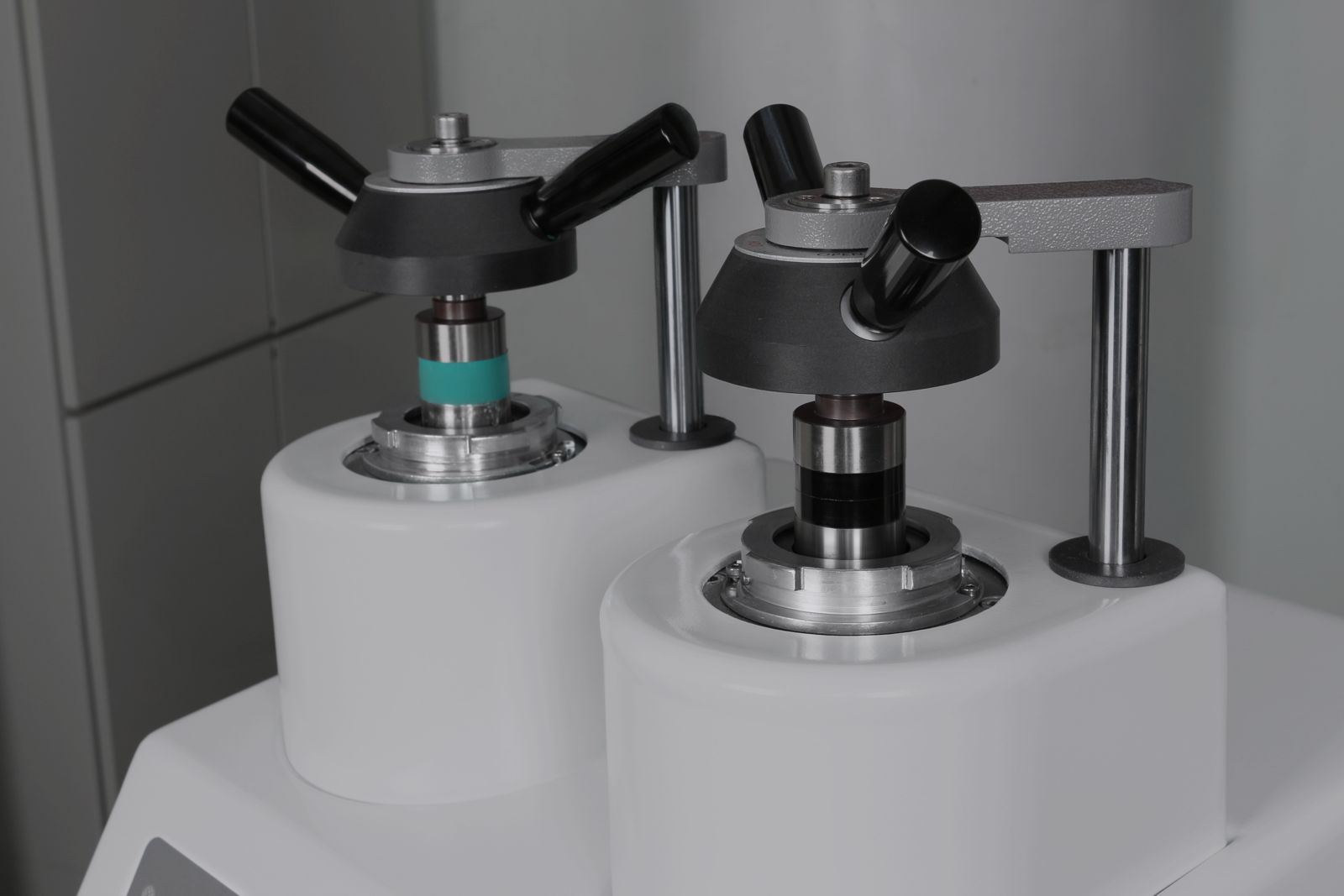
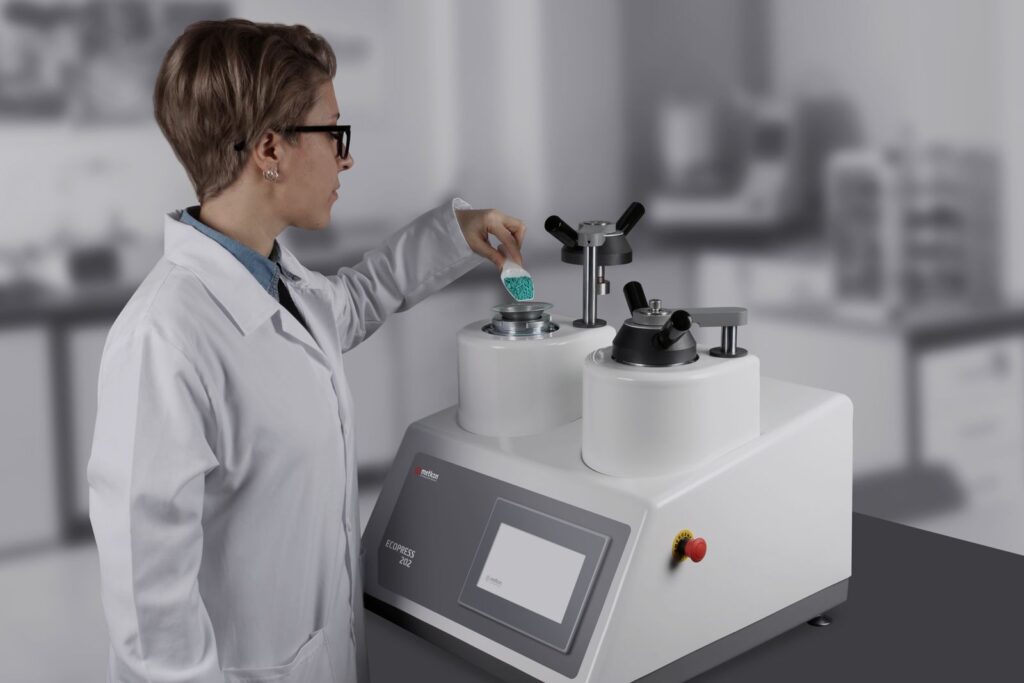
Among the systems that address the mounting precision requirements described above, the ECOPRESS 202 from Metkon represents a high-capacity approach to programmable hot compression mounting. Designed for laboratories with significant daily sample volumes, it combines the throughput advantages of dual-cylinder architecture with the parameter control necessary for consistent edge retention across diverse specimen types.
The ECOPRESS 202 operates on an electrohydraulic system — eliminating the need for compressed air, which simplifies installation and removes a common source of pressure inconsistency in facilities without dedicated air supply infrastructure. The hydraulic actuation delivers smooth, controlled ram movement and allows fine-grained pressure programming up to a maximum of 300 bar, with adjustable profiles for pressure-sensitive specimens that require gentler loading sequences before full clamping pressure is applied.
The dual-cylinder architecture is the defining throughput feature of the ECOPRESS 202. Each cylinder operates independently, accommodating mould assemblies from 25 mm to 50 mm in diameter. With intermediate rams installed, both cylinders can produce two mounts each per cycle — delivering four finished mounts in a single 7 to 9 minute complete cycle. Both cylinders can be programmed with the same or different parameters and run simultaneously or sequentially, giving laboratories the flexibility to process different specimen types in the same operational block without separate setups.
The heating system consists of five independent resistance elements delivering a combined output of 2 x 1650 W — one set per cylinder. The multi-element design ensures efficient, uniform heat transfer to the mould and provides redundancy: in the event that a single resistance fails, the remaining elements continue operating, preventing unplanned downtime mid-shift. Individual element replacement is straightforward, keeping maintenance costs and turnaround time low.
For edge retention specifically, three features of the ECOPRESS 202’s control architecture are particularly relevant:
- Programmable pre-heating allows the mould to reach a defined temperature before the specimen is clamped under full pressure. For specimens where cold resin contact initiates premature polymerization before adequate flow has occurred — a condition that produces interfacial gaps — controlled pre-heating ensures the resin remains sufficiently fluid to fully encapsulate the specimen surface before consolidation begins.
- Programmable pre-loading applies a defined partial pressure to the specimen before the full mounting cycle begins. For porous specimens that require resin infiltration into surface recesses before curing, controlled pre-loading promotes complete fill without mechanically damaging fragile surface features that would not survive full clamping pressure applied abruptly.
- Three programmable cooling modes — standard, slow, and time-based — allow cycle optimization per specimen type. The slow cooling mode is particularly valuable for specimens with coatings or assemblies prone to interfacial separation during rapid thermal cycling.
Operator interaction is managed through a 7-inch color HMI touchscreen with a straightforward interface: the operator places the specimen, selects the stored program number corresponding to the material and application, and presses start. All parameters — temperature, pressure, heating time, cooling mode, and pre-load profile — are recalled from memory automatically. The system supports a library of stored programs, allowing laboratories to build and maintain a mounting recipe database for recurring specimen types without requiring technicians to manually configure parameters for each run.
A standby temperature feature keeps the mould at a defined holding temperature between cycles, reducing the time required to return to operating temperature for the next mount. In high-throughput environments, this feature meaningfully reduces idle time without requiring the press to remain at full operating temperature continuously.
Operator safety provisions include a heat-insulated bayonet closure that prevents contact burns during mould handling, the elimination of any gap between the bottom ram and the mould body to prevent finger entrapment during operation, and an emergency stop button — a feature that is not standard across all competing hot mounting presses. For laboratories operating under formal occupational safety programs, these provisions simplify risk assessment and compliance documentation.
Gap Prevention: The Final Variable
Even with the correct resin and a precisely controlled mounting cycle, gap formation at the specimen-resin interface remains a risk for certain specimen types — particularly those with smooth, polished, or low-roughness surfaces, and those made of materials that shrink or expand significantly relative to the resin during cooling. Several practical measures reduce this risk in routine operation.
Abrasive pre-treatment of the specimen surface before mounting increases mechanical interlocking between specimen and resin, reducing the tendency for gaps to form during cooling. Light grinding or grit blasting is sufficient for most metallic specimens. For very smooth surfaces — precision-ground components, mirror-polished coatings — electroless nickel plating or thin copper plating prior to mounting provides a more reliable substrate for resin adhesion without altering the specimen’s near-surface microstructure.
Filling deep recesses or through-holes in the specimen with cold-setting resin before hot mounting eliminates air entrapment that would otherwise expand during heating and create voids at the specimen boundary. This two-stage approach requires additional preparation time but is often necessary for components with complex geometry where a single-stage hot mount would produce an unreliable result.
Verification and Quality Control of Mounted Specimens
Before committing a mounted specimen to a full grinding and polishing sequence, a brief inspection step at the light stereo microscope provides early detection of mounting defects that would otherwise only become apparent — at greater cost in time and consumables — after polishing is complete. Gaps at the specimen-resin interface are visible as dark lines or shadows under low-magnification reflected light. Resin cracking is visible as surface fractures in the mount face. Specimen misalignment — where the surface of interest is not parallel to the mount face — is detectable through asymmetric material exposure during the initial grinding step.
Catching these defects before grinding begins is far more efficient than discovering them after several polishing steps have been completed. In high-volume environments, a brief but systematic check of every mount against defined acceptance criteria — no gaps, no cracks, correct alignment — should be a standard part of the workflow rather than an occasional audit step.
Conclusion
Metallographic mounting is not a passive step in the preparation workflow — it is the structural foundation on which every subsequent operation depends. Poor mounting decisions, whether in resin selection, cycle parameter control, or specimen handling, propagate through grinding and polishing to appear as edge rounding, interfacial gaps, or delaminated coatings in the final microstructural section.
The best practices described in this article — choosing the appropriate mounting method, selecting resin based on edge-retention demands, controlling cycle parameters with precision, and verifying mount quality before committing to preparation — apply regardless of the equipment in use. Equipment such as the ECOPRESS 202, which combines high-throughput dual-cylinder capacity with programmable parameter control and advanced mounting features, provides the hardware infrastructure that makes consistent application of these practices possible at scale. But the underlying principle does not change: a well-mounted specimen, prepared with care and verified before grinding begins, is the first and most important step toward a reliable microstructural analysis.


