

What Is a Mounting Press? A Complete Guide
What Is a Mounting Press? A Complete Guide
When studying the internal structure of material samples, scientists rely on a mounting press to encase their specimens in a hardened resin, providing them with uniform mounts that shield their specimens and provide a stable foundation for preparation and analysis. These lab devices work by precisely embedding material samples in mounting compounds, in many cases also regulating heat and pressure to control the process.
Since the accuracy of sample preparation and lab results go hand-in-hand, mounting presses are a fundamental component of lab equipment and provide to keep samples in a standardised format. The mounts are made in a circular form and feature parallel surfaces that stay in focus with microscopes.
You’ll find two main types of mounting presses: hot mounting and cold mounting systems. Hot mounting presses use heat (around 180°C) and pressure (about 250 bar) to embed specimens in thermosetting resins. This method works great for hard materials, porous specimens, and cases where you need precise edge retention. Cold mounting systems work at room temperature with resins that harden without heat, making them perfect for heat-sensitive materials.
What is a Mounting Press?
The mounting process acts as a protective shield for the specimen, shielding it from damage and structural collapse, particularly when undergoing the rigors of grinding, polishing, and being studied under microscopes, when preparing materials for further analysis. The mounting also results in the retention of sharper edges, of which is essentially a necessity in detailing the tiny structures of the sample. Its role is further enhanced in creating a consistent and uniform sample that leads to dependable analysis, it’s also used to get the sample to a stage where it’s easy to manage.
Coming from modern technology, mounting presses now offer programmable controls, variable cooling systems and can produce a variety of mould sizes. They’re compatible with any number of mounting materials, such as phenolic compounds and special conductive resins, and scientists can pick the one they need for the analysis they’re planning.
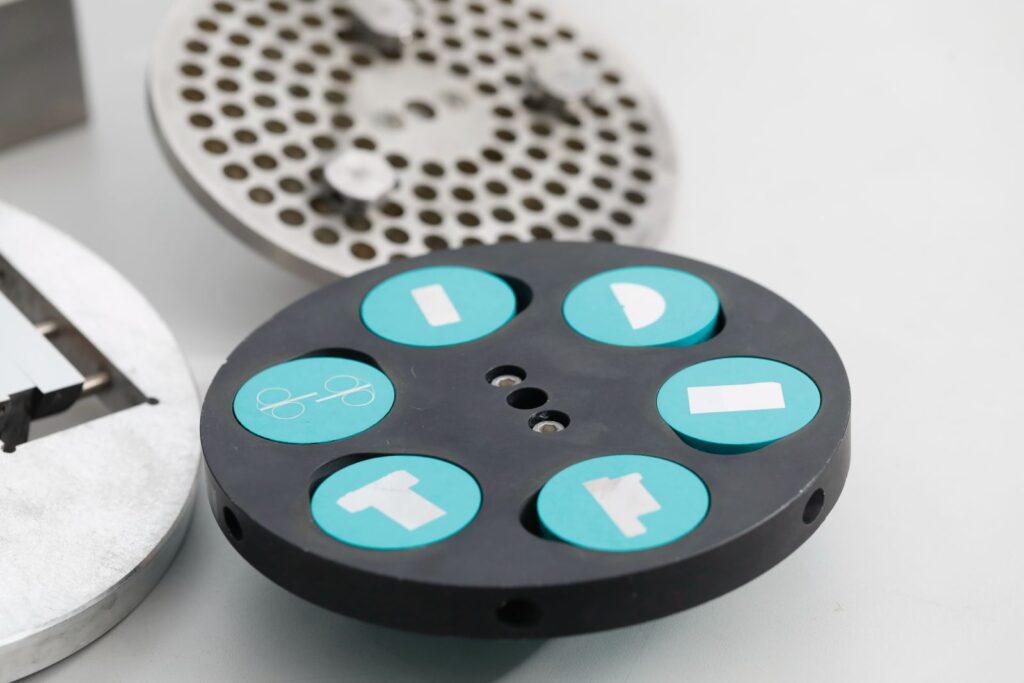
They’re weighing several factors, including the size and shape of the specimen, how heat sensitive it is, and how quickly they need the results, when scientists are deciding how to mount a specimen. Coming rushing into the picture, hot mounting produces better edge preservation and faster results, but isn’t suitable for materials that can’t withstand high temperatures, which is where cold mounting takes over.
The mounting process, as it sets the scene for accurate microstructural analysis, is pretty much critical in metallographic analysis. It ensures that the material’s structure and fragile features don’t get messed up during preparation, and the flat surface produced is basically essential for keeping everything in focus during microscope analysis.
Well-known industries such as aerospace and automotive manufacturing can’t afford to have material failures, and the accuracy of the test results relies heavily on the mounting. Since the reliability of these results is paramount, the right choice of mounting equipment and materials in these industries becomes extremely important, and dictates the setup of quality control and failure analysis procedures.
Why are Mounting Presses used in material preparation?
In relation to metallographic analysis, mounting presses are the backbone of the process. They’re expertly used to tame even the toughest, irregularly-shaped or hard-to-handle metal specimens, preparing them for analysis and testing.
Presses protect the very things they’re holding, encapsulating samples in a special grip. The smooth surface protection is really important, preventing edge and surface defects and ultimately, getting accurate microstructural readings that are impossible with rough specimens. Well-protected samples can also withstand the rigors of grinding, polishing and etching, and are less likely to get damaged.
Metallographic Sample Preparation: Expert Guide to Perfect Specimens
When processing specimens, mounting presses play a significant role in standardizing the sample format, embedding them in solid material to produce uniform mounts, a feature that makes handling, processing, and analysis in labs much easier and more effective, and permits automated grinding and polishing machines to be used to their fullest capacity.
Mounting in general results in finer microstructural analysis, a mishandled mounting may cause problems that affect the validity of the results, could wreak havoc on research studies, quality control in the manufacturing process and failure analysis. Well-known for being kinder to grinding and polishing surfaces, mounted samples are as well easier to clean up after, than unmounted samples.
Hot mounting presses excel over cold ones. The 180 degrees Celsius heat and 250 bar pressure employed by hot mounting presses have the ability to lock down the edges of the specimen, enabling one to see very fine details under the microscope, and on top of all that, creates mounts that are completely void-free, a feature that is not available with cold mounting that generally leaves behind uneven resin distribution.
Manufacturers simply can’t get by without mounting presses in order to be able to guarantee a consistent sample preparation. Companies in the aerospace, automotive, semiconductor, and failure analysis industries rely heavily on the perfect mounts provided by these machines. With heat and pressure working together to make the resin envelop the sample completely, the machines kill off air pockets and result in finely polished mounts with minute edge rounding.
Industries can also benefit from the efficiency and accuracy boosts that mounting presses deliver. Hot mounting, as an example, takes less time to cure than the old way, which means that labs can process a lot more samples, and since the mechanical stability of hot mounting keeps the sample intact during the preparation, it cuts down on artifacts that could throw off the results.
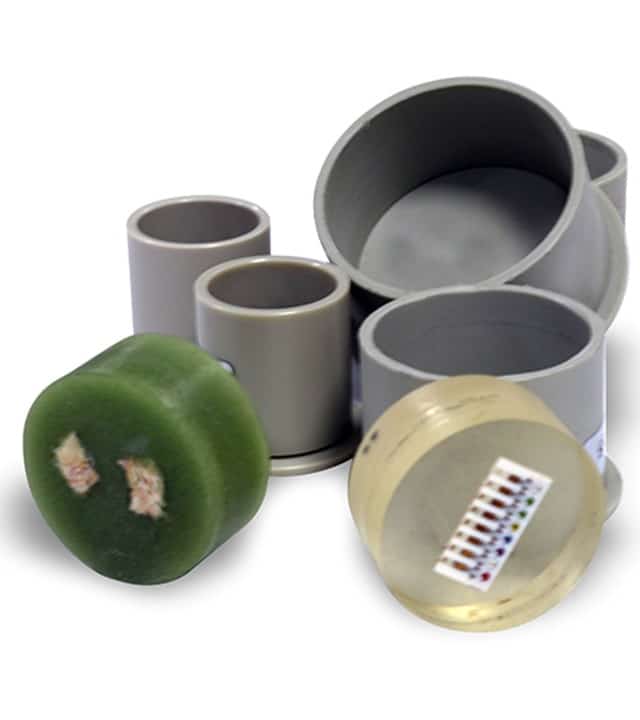
How does a Hot Mounting Press work?
Hot mounting presses work through a series of steps that turn powder resin and specimen into a solid mount ready for analysis. The process uses heat and pressure to create strong, quality specimen mounts perfect for metallographic testing.
Heating and pressure application
It’s placed in a cylinder and coated in mounting resin, and then sent to the press that heats it up to 180 degrees Celsius. Turning the resin from a powder to a liquid, when mounting a specimen. Coming from there, the press applies a steady pressure, roughly 250 bar, to ensure the liquid resin completely envelops the specimen, filling in any air pockets and smoothing out the surface.
Heat and pressure come in two stages, one phase for heating the resin from solid to liquid at its melting point, and the other is for pushing the soft resin around the specimen with steady pressure.
Modern presses have a feature called “Sensitive Mode” that works beautifully with pressure-sensitive specimens like minerals, gemstones and electronics. It starts with a preheating phase that doesn’t apply any pressure, which is gentle enough to not damage those delicate things, then the second stage ramps up the heat and reduces the pressure to 150 degrees Celsius, and you’re looking at a longer heating time.
Petrography Explained: Essential Methods in Modern Petrology Science
Cooling and ejection process
The curing phase is finished, and the press moves into the cooling stage, with constant pressure that eliminates the warping and discolouration of the finished mount, when the polymerization of a mount is complete. Contemporary mounting presses have come a long way in perfecting their cooling methods to find a balance between speed and quality.
Today’s metallographic presses offer three distinct cooling options, namely standard, slow and time-based, but a water-based cooling system found in modern presses significantly shortens the cycle time, with some mounts now ready in 5-7 minutes. Nonetheless, this method may introduce internal stress into certain resins and affect edge retention.
Air cooling on the other hand, permits the mount to cool naturally, though may take approximately 10 to 15 minutes to do so, but as an added benefit provides mounts with less internal stress and excellent edge retention, and thus is the most reliable for critical studies.
After the cooling cycle is done and the mount is safe to handle, pressure is released. The modern press now opens the mould assembly with a bayonet closure system, and security systems keep the mould shut until the cycle is finished, shielding the operator and the equipment.

Key features of modern mounting presses
Modern metallographic mounting presses now come with advanced features that boost productivity, consistency, and safety in materials testing labs. These systems deliver precision and are nowhere near as basic as their manual predecessors.
Programmable controls
The intuitive touchscreen interfaces give you a clear view of what you’re working with. Programmes and instructions at your fingertips, when working with today’s presses. High-end models allow you to kickstart a programme with a single key and fill in the blanks with preset settings for pressure, heating and cooling. Coming running over back to check on the progress is a thing of the past, thanks to the automation that ensures consistent results.
These systems can store up to 99 custom programmes, and all you need is a single recall to get going with the perfect settings for any material. Plus, operators can adjust the parameters in a completely natural way during the mounting process, adding a bit of wiggle room without slowing things down.
Cooling modes
You now have three different cooling options at your disposal. Standard, Slow and Based on Time, each specifically designed to work with different types of resin, when mounting with the latest presses. Standard cooling utilises water circulation through the cooling system and knocks down the print times to just 5-7 minutes per mount, Slow is basically tailored to thermoplastic resins as they require a bit longer to cure, giving crystal clear results. The Time-based option lets you set your cooling time to the second, which is great for those jobs that need precise control. By using these cooling features, you can really find the sweet spot between speed and quality.
Safety mechanisms
The core team puts safety first in modern mounting press design. The presses use insulated mould closure systems to protect users from burns. Some models have built-in exhaust devices that keep operators safe from fine dust while filling resin. Strong bayonet mould closure systems make the process safer and eliminate the need to clean cylinder threads before closing. On top of that, the presses now have sliding closures with suction nozzles that direct extra granulate into removable containers, which keeps the workspace clean and safe.
Mould size flexibility
Advanced mounting presses stand out because they work with different specimen sizes. These systems take multiple mould sizes, usually between 25 mm and 50 mm in diameter. Labs can process various specimen sizes without buying several machines. Quick mould exchange systems with dovetail connections for lower rams work without mechanical fastening. Some models include intermediate rams that double your production capacity. The high-end systems can mount several specimens at once, which helps labs process more samples.
The Ultimate Guide to Grinding and Polishing: Techniques, Equipment, Materials, and Best Practices
Accessories and add-ons for mounting presses
Metallographic mounting presses work better with accessories that boost their functionality and versatility. Labs can now prepare samples more efficiently than ever before.
Mould assemblies
Mould assemblies are the foundations of mounting presses. They come in sizes from 25 mm to 50 mm (or 1″ to 2″). These interchangeable units fit different specimen sizes, and their specialised designs offer unique benefits. Modern moulds now include user-focused features like ergonomic handles and special collars that make specimen removal easier. Some assemblies come with duplexing spacers that let you create two mounts at once, which doubles your output. The closure systems are different for each model – you’ll find some with bayonet mechanisms and others with slide closures to secure the mould. These moulds are built from materials that can handle repeated heat and pressure cycles without breaking down.

Recirculating cooling systems
Recirculating cooling systems are a great way to get better performance from mounting presses while making lab operations more sustainable. The systems use stainless steel tanks that hold between 14 gallons (53 litres) and 40 litres. High-end models use 24V DC diaphragm pumps that deliver 1.3 GPM (5 L/min) for steady coolant flow. These systems cut water usage by reusing water instead of constantly drawing fresh supplies. You’ll also find helpful features like radiator-fan cooling mechanisms, sturdy wheels for easy moving, and temperature gauges to monitor coolant conditions. The systems merge naturally with specific mounting press models through quick-connect fittings and their own hose assemblies.
FAQs
Q1. What is the primary purpose of a mounting press in material analysis? A mounting press is used to encapsulate material samples in resin, creating uniform mounts that protect specimens and provide a stable platform for metallographic analysis. This process is crucial for maintaining sample integrity during preparation and examination.
Q2. How does a hot mounting press differ from cold mounting methods? Hot mounting presses apply both heat (around 180°C) and pressure (about 250 bar) to embed specimens in thermosetting resins. This technique offers better edge retention and is particularly valuable for hard materials and applications requiring precise microstructural examination.
Q3. What are the key benefits of using a mounting press in material preparation? Mounting presses protect fragile specimens, improve edge retention, create standardised sample formats, and enhance the overall quality of microstructural analysis. They also increase laboratory efficiency by allowing for semi or fully automated grinding and polishing processes.
Q4. What cooling options are available in modern mounting presses? Modern mounting presses typically offer three cooling modes: standard (water-based), slow, and time-based. These options allow users to balance productivity with mount quality, catering to different resin types and specific application requirements.
Q5. Are there any safety features incorporated in contemporary mounting presses? Yes, modern mounting presses prioritise operator safety. They often include insulated mould closure systems, integrated exhaust devices to prevent dust inhalation, and robust bayonet mould closure systems. Some models also feature sliding closures with suction nozzles to maintain cleanliness and safety during operation.


