
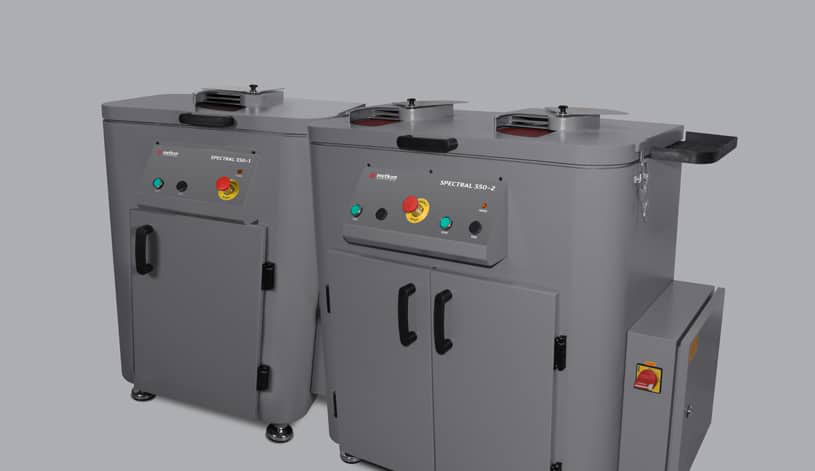
Surface Grinding Techniques: Perfect Steel Sample Preparation for OES/XRF
Surface Grinding Techniques: Perfect Steel Sample Preparation for OES/XRF
Surface grinding techniques make steel sample preparation perfect for spectroscopic analysis. Materials scientists and quality control specialists know that surface finish quality determines the accuracy of their results. The SPECTRAL250 and SPECTRAL350 are a great way to get high-quality sample preparation that leads to accurate spectroscopic analysis.
Surface grinding creates exceptionally flat surfaces on metal samples through specialized preparation. The SPECTRAL250’s compact design makes it perfect for steel samples. This table-top portable surface grinder operates without vibration. The machine’s quiet operation and minimal dust output make it perfect for lab environments. This piece explores surface grinding approaches and professional tips that improve your spectroscopic results by a lot. You’ll learn to pick the right equipment and methods that match your steel sample preparation needs.
Understanding Surface Grinding for Steel Samples
Surface grinding is the life-blood of precision engineering that helps specialists achieve very tight tolerances on steel samples. This technique uses a rotating abrasive wheel to remove material from a workpiece’s surface and creates the flat finishes needed for accurate analysis.
The process delivers remarkable dimensional accuracy and can achieve tolerances as precise as ±0.0001 inches or ±0.002 mm. Good grinding sets up the geometric and metallurgical foundation that determines the success of later operations.
The workpiece sits secured on a magnetic chuck as the abrasive wheel spins above it to remove material systematically. Engineers choose grinding wheels based on the steel sample’s properties. These wheels are made from materials like aluminum oxide, silicon carbide, diamond, or cubic boron nitride.
You’ll find modern surface grinders in different setups: horizontal spindle, vertical spindle, and disk grinders. Each type works best for specific applications. The process plays a vital role in many industries like manufacturing, automotive, aerospace, and tool making.
Bad grinding methods can make an analysis worthless by creating misleading artifacts. Anyone working with high-precision steel samples needs to become skilled at this critical technique.

Key Techniques for Precision Steel Sample Preparation
Steel sample preparation demands specific grinding techniques to minimize surface deformation. The process starts with selecting the right abrasives for your surface – 120-180 grit works best for rough-cut surfaces, while 180-240 grit suits abrasive wheel cuts. You should work your way through finer grits up to 600 to remove all previous scratches completely.
The sample needs a 90-degree rotation between grinding stages. This rotation helps verify uniform material removal across the surface.
Temperature control plays a vital role in the process. Heat buildup can alter the material’s microstructure and lead to several problems: dimensional inaccuracies from thermal expansion, compromised surface integrity, burns, faster tool wear, and unwanted residual stresses.
What is the Vickers Hardness Test? | Method, Applications & Advantages
The key lies in applying steady, moderate pressure as you move samples across the grinding surface. Excessive pressure damages the subsurface deeper, while insufficient pressure leads to uneven results and wasted time.
Silicon carbide papers with waterproof backing yield the best results. PSA-backed papers help achieve more uniform material removal and alleviate “mooning” issues at sample edges.
Water serves three key purposes: it cools the surface, provides lubrication, and clears debris. The process needs adequate water at the start, but too much can cause unwanted aquaplaning.
Safety remains the top priority among other technical aspects. The setup should include integrated vacuum systems with spark traps to ensure dust-free operation.
Optimizing Equipment and Accessories for Best Results
The right equipment serves as the life-blood of successful steel sample preparation. The SPECTRAL series delivers precision grinders built specifically for spectroscopic sample preparation with strong, vibration-free construction.
Wheel speed plays a significant role in achieving optimal grinding results. As one expert noted, “hardness can be softened by slower speeds—and vice versa”. Dual-speed models like SPECTRAL 350-2S demonstrate this principle by offering both 1400 and 2800 rpm options for different materials.

These machines come with several essential features:
- Dynamically balanced grinding disks for smooth operation
- Special vacuum design that secures abrasive paper without glue
- Integrated dedusting systems with spark traps for dust-free operation
The right workholding proves just as important. Magnetic and mechanical specimen holders fit samples up to 50 mm in diameter and ensure maximum operator safety. The grinding disk’s partial cover allows grinding only in a segment to enhance operator comfort and protection.
The Ultimate Guide to Grinding and Polishing: Techniques, Equipment, Materials, and Best Practices
Companies with stable workstation locations benefit from central dust extraction systems that improve long-term efficiency. These systems, combined with heat recovery technology, can substantially speed up return on investment.
Success depends on more than just speed. The perfect steel sample preparation needs the right combination of grit selection, wheel grade, and appropriate dressing techniques.
Bottom Line
Surface grinding techniques are crucial skills for anyone working in steel sample preparation. In this piece, we get into the critical aspects of this precise process. Getting the perfect surface finish needs both technical knowledge and hands-on experience.
The right equipment is key to success. Machines like the SPECTRAL250 and SPECTRAL350 are a great way to get advantages through their vibration-free operation and integrated dust extraction systems. The science behind surface grinding helps us understand why proper technique matters – especially when tolerances as precise as ±0.002 mm can determine analytical results.
The best techniques lead to optimal outcomes. Progressive grinding through multiple grit stages works well when you rotate samples 90 degrees between each stage to ensure uniform material removal. Temperature control during grinding stops microstructural alterations that could compromise sample integrity.
Abrasive choice, consistent pressure, and proper water usage help achieve the perfect surface finish. A methodical approach ended up saving time by preventing rework, rather than rushing through preparation.
Safety remains as important as technical precision. Dust extraction systems with spark traps keep both operators and equipment safe during grinding. These safety features deserve equal attention when choosing grinding equipment.
Becoming skilled at surface grinding takes practice, but results show in flatter surfaces, more accurate analyzes, and reliable conclusions from steel sample testing. These foundational skills will deliver superior analytical outcomes consistently, whether you work in quality control, materials science, or metallurgical research.


