

Metallographic Sample Preparation: Expert Guide to Perfect Specimens
Metallographic Sample Preparation: Expert Guide to Perfect Specimens
Metallographic sample preparation is essentially the cornerstone of any trustworthy materials analysis and characterization. When specimens aren’t prepared correctly the microstructures can be misread measurements become unreliable. The whole research can end up with faulty conclusions. Even though its importance is well recognized many labs still wrestle with results because their preparation techniques fall short.
This thorough guide leads you through every stage of metallographic preparation—from the first cut, to the final etch. Geared toward materials scientists quality‑control specialists and metallurgical researchers it supplies hands‑on techniques for surmounting the obstacles that keep specimens from reaching perfection.
By taking this route you’ll pick up how to slice samples cleanly—steering clear of unwanted artifacts—choose the right mounting compound run a tight grinding‑and‑polishing sequence and apply the proper etching steps. Moreover you’ll learn to sniff out and fix the prep mistakes that could jeopardize your analysis.
Whether you’re inspecting welds, tracking material failures or characterizing alloys mastering metallographic preparation techniques will ensure your specimens reliably reveal their true microstructural features, under the microscope.
Sectioning: Preparing the Sample Without Inducing Damage
The first physical step, in metallographic sample preparation is sectioning the material to produce a specimen that truly represents the bulk. Using sectioning methods keeps the original microstructure intact and steers clear of mechanical deformation heat‑induced damage or any other artifacts that could compromise the analytical results.
Choosing the Right Cutting Tool: Abrasive vs. Diamond Saws
Metallographic sample preparation is essentially the cornerstone of any trustworthy materials analysis and characterization. When specimens aren’t prepared correctly the microstructures can be misread measurements become unreliable. The whole research can end up with faulty conclusions. Even though its importance is well recognized many labs still wrestle with results because their preparation techniques fall short.
This thorough guide leads you through every stage of metallographic preparation—from the first cut, to the final etch. Geared toward materials scientists quality‑control specialists and metallurgical researchers it supplies hands‑on techniques for surmounting the obstacles that keep specimens from reaching perfection.

By taking this route you’ll pick up how to slice samples cleanly—steering clear of unwanted artifacts—choose the right mounting compound run a tight grinding‑and‑polishing sequence and apply the proper etching steps. Moreover you’ll learn to sniff out and fix the prep mistakes that could jeopardize your analysis.
Whether you’re inspecting welds, tracking material failures or characterizing alloys mastering metallographic preparation techniques will ensure your specimens reliably reveal their true microstructural features, under the microscope.
Minimizing Heat-Affected Zones During Sectioning
The heat that shows up during cutting is a leading cause of specimen damage. When temperatures run high the microstructure can be altered thermal stress can creep in phase changes may occur and low‑melting‑point components can even liquefy. Fortunately several approaches exist to tame these problems:
The Ultimate Guide to Grinding and Polishing: Techniques, Equipment, Materials, and Best Practices
Deploy a flow of coolant aimed precisely at the cutting interface. Adopt a feed rate letting heat dissipate in a controlled way. Choose cutting parameters—speed and load—that are suited to the material. It can be helpful to go for cutting if the material, in question doesn’t tolerate heat well.
Water‑based coolants generally do the job well in situations while oil‑based variants are chosen to keep reactive metals from oxidising. Besides pulling the temperature down a coolant also sweeps away cutting debris that would otherwise hamper cutting efficiency.
Clamping Techniques to Prevent Sample Distortion
Securing the part with a designed fixture is just as critical, for keeping specimens pristine. A clamp that’s too loose invites vibration, chatter marks and the risk of sample deformation. On the side applying excessive pressure can generate mechanical stress or even crush delicate materials.
Some tried‑and‑true clamping strategies include:
- Latching a set of clamps onto the workpiece spreads the load uniformly.
- Laying a cushion, over soft materials.
- Make sure the clamps are positioned away, from the area you plan to analyze.
- Adopting fixtures, for working with irregularly shaped samples.
- Thin or delicate specimens usually benefit from a couple of tailored tactics—embedding them in a temporary support medium and using vacuum fixtures that distribute the holding force evenly across the surface.
During the sectioning frequent visual checks act as an early‑warning system catching any emerging flaws before the workflow moves on to later preparation stages. A sectioned specimen should exhibit a largely even smooth face with only faint burrs or minor edge warping—clear signs that the chosen parameters have successfully preserved the material’s original structure.
Having been precisely sectioned the specimen proceeds to mounting, a step that locks it in place and readies it for the grinding and polishing phases that follow.
Mounting: Stabilizing the Sample for Further Processing
After sectioning, properly mounting specimens represents a crucial step that facilitates handling and ensures edge retention throughout subsequent preparation stages. Mounting provides a standardized shape that simplifies manipulation and protects delicate features from damage during grinding and polishing operations.
Hot Mounting vs. Cold Mounting: When to Use Each
Mounting relies on thermosetting or thermoplastic resins that are pressed together under high heat (150 – 180 °C) and strong pressure (290 – 420 bar). In 15 – 20 minutes it produces dense hard mounts, with excellent edge retention. Consider mounting when:
- Scrutinizing how well edges retain their sharpness, in unforgiving materials.
- Preparing samples, at once to boost efficiency.
- Handling specimens that demand high flatness.
- Scrutinizing those substances that despite being bathed in heat remain stubbornly unaltered.
Nonetheless when a material is heat‑sensitive or a specimen exhibits traits a cold‑mounting approach often becomes indispensable. Mounting consists of blending a liquid resin with a hardener that hardens at ambient temperature all without any applied pressure. Opt, for mounting when encountering:
- Heat‑sensitive materials, like polymers and coated samples.
- Specimens possessing microstructures reshaped by exposure.
- Porous structures that call for infiltration
- Delicate or break‑prone components
- Samples brimming with substances.
Cold mounting usually calls for a cure period—anywhere from six up, to twenty‑four hours—but the trade‑off is that it keeps the microstructure of temperature‑sensitive specimens intact.
Epoxy Resin Selection Based on Material Type
Selecting appropriate mounting media depends heavily on the specimen material properties and analytical objectives. Primary resin types include:
- Acrylic resins – Fast-curing (8-15 minutes) with moderate hardness and shrinkage. Suitable for routine examinations where edge retention isn’t critical.
- Epoxy systems – Superior adhesion with minimal shrinkage (0.5-1%). Ideal for porous materials, delicate specimens, and situations demanding excellent edge preservation. Their longer curing time (6-24 hours) represents the main drawback.
- Phenolic compounds – Used primarily in hot mounting, offering excellent hardness and edge retention for harder materials like tool steels and ceramics.
- Conductive resins – Contain metallic fillers (copper, nickel) that create electrical pathways through the mount. Essential for scanning electron microscopy or electrolytic polishing applications where specimen conductivity prevents charging artifacts.
Matching the hardness of the mounting medium, to the specimen is vital—soft samples set in a resin tend to develop rounded edges during preparation while very hard specimens need an equally stiff mounting material to keep their edges intact.
Avoiding Air Bubbles and Voids in Mounts
Air trapped in a mount brings a host of headaches: it compromises the mount’s structural strength lets polishing slurry seep in and muddies the microscopic view. Apply the following methods to achieve bubble‑free mounts:
- Thoroughly blend the resins. At a measured pace to curb air entrapment.
- Allow the blended resins a brief pause— two to three minutes—, before pouring.
- Guide the resin, along the wall of the mounting cup instead of pouring it straight onto the specimen.
- It’s worth considering vacuum impregnation for materials especially at pressures, between 15 and 30 inHg.
- Stick closely to the resin‑to‑hardener mix the manufacturer recommends.
- Check that the specimens and mounting cups are spotless and completely dry, before mounting.
For cold‑mounting professional vacuum‑impregnation rigs efficiently evacuate air trapped in both the mounting medium and the specimen’s pores. In practice however a modest tap of the mounting cup, against a surface often frees stubborn bubbles making specialized equipment unnecessary.
Once the specimens are securely mounted they proceed to the grinding‑and‑polishing phase, the point at which the metallographic preparation truly begins to unveil the material’s features.
Grinding and Polishing: Achieving a Scratch-Free Surface
Grinding and polishing transforms a rough-cut specimen into a perfectly flat, mirror-like surface suitable for microstructural examination. This critical stage removes sectioning damage while gradually reducing surface roughness to reveal the true material characteristics.
Metallographic Grinding Tips: Expert Guidance for Perfect Sample Preparation
Sequential Abrasive Grit Selection (SiC to Diamond)
A reliable metallographic preparation reads like a measured march beginning with the grit and ending with the finest. First silicon‑carbide (SiC) paper is used to strip any mounting medium and to level the specimen’s face. Starting with a P120–P240 grit quickly wipes out the damage inflicted during sectioning and establishes a planar surface. The sequence then advances through P400, P600 and finally P800, each successive grade polishing away the scratches left by the one gradually refining the surface.
When dealing with abrasives a systematic planned method is required.
Between each stage rotate the specimen a quarter turn to sweep away any scratches the preceding step may have left.
Apply a steady pressure to keep the grinding even and prevent any single edge from getting preferential treatment.
Before stepping to the stage give the current one a meticulous wash making certain the abrasive grains remain segregated and never cross‑contaminate.
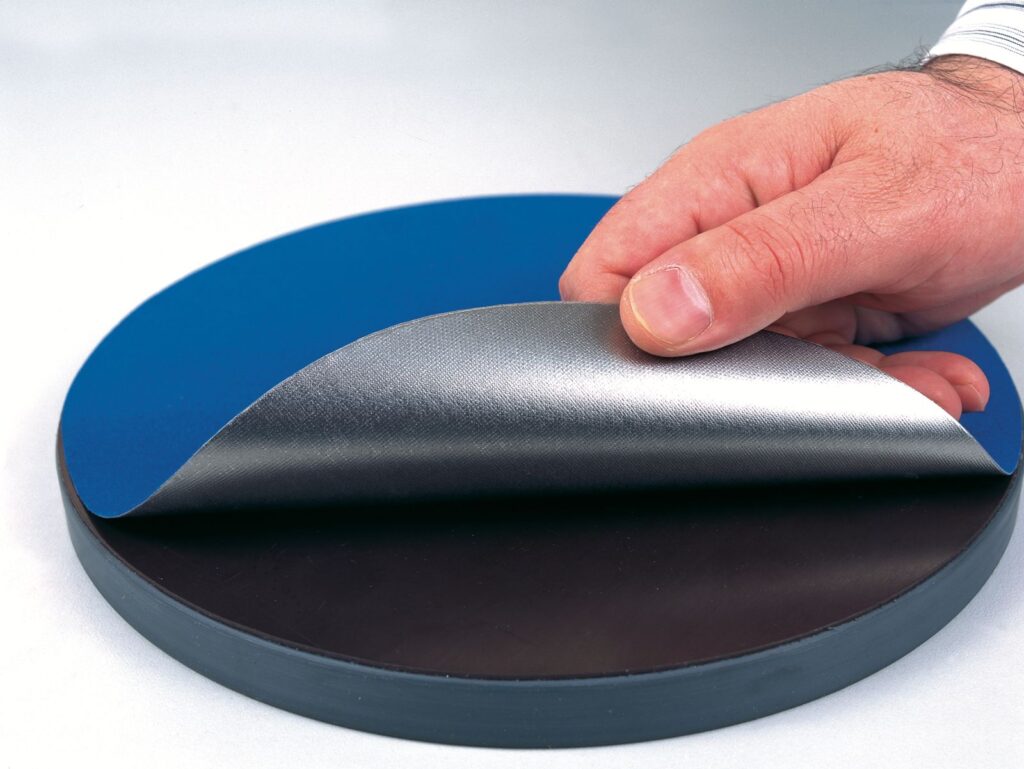
In labs the terminal polishing routine climbs a sequential ladder of diamond suspensions—starting with a 9 µm grit then moving to 6 µm followed by 3 µm and finally a 1 µm slurry—each progressively finer medium wiping clean the scratches left by its predecessor. When metallographic work demands the accuracy, a sub‑micron colloidal silica (roughly 0.05–0.02 µm) is introduced, producing an essentially flawless surface finish.
Landing the splash of lubricant is non‑negotiable when grinding and polishing. Should the workflow go without any lubrication the specimens inevitably end up with a litany of ailments, such, as:
When friction drives the temperature into the ranges the material’s delicate internal lattice is reconfigured.
In practice the softer phases often end up smeared across the surrounding constituents.
A stray abrasive grain that gets lodged can give rise to artifacts, which in turn can fool the eye.
Paper that wears out quickly diminishing the efficiency of preparation.
Choosing an alcohol‑based or specially formulated oil lubricant prevents the constituents from washing away. Magnesium and aluminum pieces generally favor lubricants, which keep oxidation at bay during the preparation stage. For steel metallography a generous coat of water typically provides lubrication.
Vibratory Polishing for Final Surface Finish
Vibratory polishing excels at producing deformation-free surfaces for critical examinations. This technique employs low-amplitude oscillations (1-5μm) that gently remove material through micro-cutting rather than abrasion. The specimen floats freely in a slurry of fine abrasive and lubricant, minimizing directional artifacts.
This method proves especially valuable for:
- Multi-phase materials with constituents of varying hardness
- Materials susceptible to mechanical twinning or strain-induced transformations
- Specimens requiring extended polishing (2-24 hours) without edge rounding
Common Artifacts: Comet Tails and Pull-Outs
With painstakingly careful technique some preparation artifacts can still turn up. Comet tails appear as scratches that radiate from hard particles or inclusions usually caused by insufficient lubricant, excessive pressure or a contaminated polishing cloth.
Pull‑outs happen when the tougher particles or phases part ways with the matrix during sample preparation spawning pores or voids that can be misread as genuine features in the analysis. Materials in which the phases exhibit a hardness contrast are especially vulnerable, to this artifact. Mitigate these issues through:
- Aim for more incremental changes in grit size as you move from one preparation step, to the next.
- Lengthened polishing intervals coupled with pressure.
- Specialized embedding methods, for materials
- Selecting mounting media whose hardnesss on par, with that of the specimen.
Throughout the grinding‑and‑polishing routine the objective stays the same—yield a surface that faithfully mirrors the material’s microstructure while steering clear of any preparation‑induced artifacts that could mislead analysis.
What is the Vickers Hardness Test? | Method, Applications & Advantages
Etching: Revealing the Microstructure Accurately
Etching serves as the final critical step in metallographic preparation that selectively dissolves or colors microstructural features, making them visible for analysis. A perfectly polished surface reveals little about a material’s microstructure until properly etched, which exposes grain boundaries, phases, and other important characteristics.
Chemical Etchants for Steel, Aluminum, and Copper Alloys
Choosing the etchant hinges on the alloy’s composition and the particular micro‑features one needs to see. For iron‑based materials Nital—a blend of 2–5 % nitric acid in ethanol—continues to be the go‑to solution for unveiling the overall microstructure and bringing martensite into clear view in heat‑treated steels. In contrast Picral, formulated with about 4 % acid in ethanol proves effective at exposing pearlite and carbide arrangements, in both carbon and alloy steels.
For aluminum alloys Keller’s reagent—comprising 2.5 ml acid, 1.5 ml hydrochloric acid 1 ml hydrofluoric acid and 95 ml distilled water—proves quite effective at bringing grain boundaries and constituent phases into clear view. In the case of copper alloys, a bath (5 g FeCl₃ dissolved in 50 ml HCl and topped, up to 100 ml with water) or an ammonium persulfate solution (10 g dissolved in 90 ml water) typically does the job highlighting the grain structure while avoiding excessive darkening.
Controlling Etch Time and Temperature
Proper etching hinges on control of several variables. In practice immersion times usually fall between three and sixty seconds a range set by the etchant’s potency and the material’s reactivity. Starting with the dip and inspecting the specimen after each application until the desired contrast appears is a sensible strategy. Mixed etchants consistently produce more predictable outcomes, than solutions that have been sitting for a while.
How hot the solution gets dramatically shapes the etching speed—warmer mixes become more aggressive and can easily go far. For specimens try these tactics:
- Keep the solutions, at room temperature ( 20–25 °C) to ensure reproducible results.
- Choosing to apply the substance with a swab of immersing it grants markedly better control, over reactive materials.
- Interrupted etching, woven together with neutralisation intervals orchestrates a measured evolution of the pattern.
When the etching runs amok the resulting contrast is so pronounced that the delicate features melt into oblivion; when the etch is timid the microstructure remains stubbornly cryptic. Consequently pinning down the degree of etching is a skill honed through hands‑on tinkering with each material‑etchant duo.
Safety Precautions When Handling Etchants
Because metallographic etchants contain acids and other hazardous chemicals strict safety protocols become indispensable. Always work beneath a functioning fume hood to prevent inhalation of toxic vapors. In addition appropriate personal protective equipment— gloves, a face shield and a lab coat—should be worn.
Etchants should be kept in containers that are both clearly labeled and chemically compatible each tucked, inside containment to catch any stray spill. Have a solution—pre‑mixed as a neutralizer—within arm’s reach for an immediate spill fix. Importantly never under any circumstances mix unknown chemicals; unpredictable pairings can erupt into violent reactions or generate dangerous by‑products.
After etching give the specimens a rinse, with the appropriate solvents then dry them with a steady stream of clean, filtered air to keep staining artifacts from spoiling the later microscopic examination.
Final Inspection: Ensuring Sample Readiness for Microscopy
Proper final inspection techniques ensure that metallographic specimens reveal their true microstructural characteristics under microscopic examination. This critical quality control step prevents wasted time analyzing inadequately prepared samples and ensures accurate interpretation of material properties.
Microscope Calibration for Accurate Imaging
Prior to examining your specimen, verify that your microscope delivers reliable and repeatable results. First thing to remember, calibration begins with proper illumination settings—adjust Köhler illumination to ensure even light distribution across the field of view. Indeed, uneven illumination creates shadows that obscure important microstructural details.
Accurately calibrate the microscope’s measurement system using a certified stage micrometer at each magnification level. This process establishes the precise relationship between pixel dimensions and actual physical distances, essential for quantitative microstructural analysis.
For digital imaging systems, white balance adjustment prevents color shifts that might affect phase identification or etching contrast interpretation. Moreover, verify that all optical components remain free of dust or residue that could be misinterpreted as specimen features.

Checklist for Surface Quality Before Analysis
Perform a systematic quality assessment of your prepared specimen:
- Examine the surface under low magnification first to assess overall preparation quality
- Verify absence of preparation artifacts (scratches, pull-outs, comet tails)
- Confirm consistent polish across the entire examination area
- Check edge retention, primarily in multi-phase materials
- Ensure adequate etching contrast without over-etching
- Verify that the surface is clean and free of residual polishing compounds
Occasionally, specimens may require additional cleaning with alcohol or acetone to remove fingerprints or organic residues that accumulated during handling. Essentially, any contamination can interfere with image clarity and analytical accuracy.
Documenting and Archiving Sample Metadata
Comprehensive documentation preserves the context and conditions under which specimens were prepared and analyzed. At this point, record crucial information including:
- Complete material identification and composition
- Specimen orientation relative to original component
- Detailed preparation procedure (mounting, abrasives, etchants)
- Equipment settings used during preparation
- Date and operator information
- Location of extraction from parent material
This metadata proves invaluable for future reference, troubleshooting, or comparative studies. Notably, digital image management systems allow direct attachment of preparation parameters to micrographs, creating a permanent record of conditions that influenced the observed microstructure.
Final inspection represents the gateway between specimen preparation and meaningful analysis—time invested here prevents erroneous conclusions based on preparation artifacts.
Conclusion
Nailing the metallographic prep directly decides the quality and reliability of material‑analysis outcomes. In the course of this guide we have parsed every step that ensures the routine creation of pristine specimens. Metallographers who master these techniques end up producing data that’re not only more accurate but also more reliable, for research and quality‑control uses.
Sectioning is the cornerstone of specimen preparation; selecting the cutting approach keeps unwanted artifacts from sneaking in and compromising the analysis. Next comes mounting, which locks the piece in place and shields it throughout processing with the mounting method chosen to suit the material’s quirks. Then the grinding‑and‑polishing routine methodically removes any preparation‑induced damage. Creates the mirror‑like finish essential for reliable microscopic examination.
When etching is performed with care the authentic microstructural features emerge cleanly free of distortion or artifacts. A final exhaustive inspection then verifies that each specimen meets the required quality standards before any detailed analysis begins. By following this routine typical slip‑ups—heat damage, edge rounding, pull‑outs and over‑etching—are kept at bay.
Many laboratories that grapple with flaky inconsistent data eventually trace the trouble back to shortcuts or simple mishaps made during the preparation stages. Investing a bit diligence into each step tends to pay off handsomely—producing microstructures that are easier to interpret and measurements that are noticeably tighter. Moreover when the procedures are carefully recorded the work becomes reproducible. The documentation serves as a handy reference, for any follow‑up investigations.
Metallographic Sample Preparation isn’t just a matter of theory; it calls for solid technical know‑how paired with gritty hands‑on experience. Sure the routine can feel like a slow‑burn exercise in patience and exactitude. The payoff is that the analyst can stare at a micrograph and know, without second‑guessing whether a speck is a true grain boundary or a stray artifact from the polishing step. Those material scientists who commit to this disciplined step‑by‑step method consistently pull back the curtain on the material’s behavior, which in turn fuels spot‑on characterization reliable failure analysis and trustworthy quality checks, across the whole spectrum of metallurgical work.


