
Hardness Testing Explained: From Basic Methods to Expert Techniques
Hardness Testing Explained: From Basic Methods to Expert Techniques
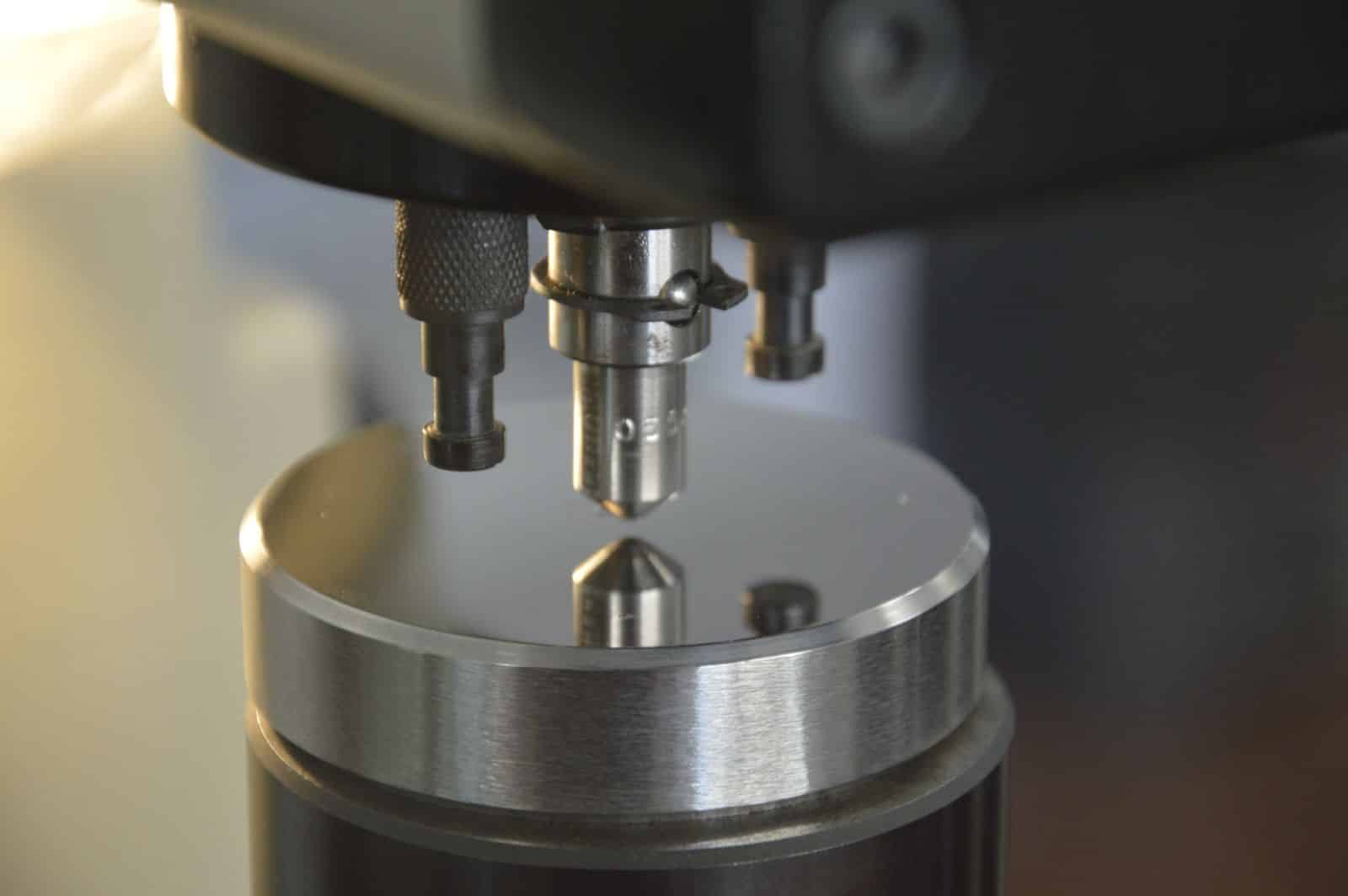
Hardness testing provides vital information about materials, but it can also be applied to help identify potential product failures. Whether for the screen on a smartphone or the skin of an airplane, how well a material does not bend or is resistant to bending underlies whether it’s appropriate for application. Hardness, unlike other mechanical properties, is not a fundamental property and represents essentially the total combined resulting elastic and plastic deformation in response to an applied controlled force.
Hardness measurements are used in assessing materials by engineers in all disciplines, but the determination of the suitable testing approach relies on several factors such as material type, sample size, and desired precision. Whether Vickers testing small, fine microstructures or Brinell testing on castings with a large grain size, there are unique advantages for each test.
This definitive work discusses hardness measurement technology, such as the diameter of a penetration indentation or size of the depressed surface, often referred to as hardness. In addition, you will learn about how load ranges affect measurements, variables that impact accuracy, and what is the right testing method for their unique material and application needs.
Understanding Hardness and Its Role in Material Testing
Material hardness is a fundamental concept in engineering and materials science. This knowledge of hardness is critically important when designing parts for automotive, aerospace, or consumer applications.
In this section, we discuss what hardness really is in an engineering sense, why it doesn’t exist as a basic property, and its relationship to wear resistance.
Definition of Hardness in Engineering Context
Hardness (in the sense of resistance to localized plastic deformation) can be modeled as local stress/strain fields. This property is perceived as resistance to indentation, scratching, or cutting. In the most basic sense, when engineers use the word “hardness,” they’re talking about a material’s ability to stay in one shape when concentrated force or stress is applied.
Another difference lies in the hardness of things. “Hard” ceramics and steels are at very high hardness, while polymers and “soft” metals (like sodium) exhibit much lower resistance to such deformation. For this reason, methods to measure hardness are valuable in selecting materials for a wide range of uses.

The importance of hardness in actual use is demonstrated by its relationship with the lifespan of a component. As a general rule, hard materials are less sensitive to mechanical damage over an extended period of service at surface contact load, friction, or necessity of impact.
Hardness testing is also a necessary part of product quality control in industry.
Why Hardness is Not a Fundamental Property?
Hardness is not an intrinsic physical property of the substance, but rather depends on testing conditions. This distinction is crucial for engineers and material scientists to understand. Hardness is not an absolute value that can be directly compared with structure, but it can, according to some research, provide a good approximation for the material performance in various applications.
Another reason that hardness depends on two factors (size and temperature) is that it is a hybrid property. A single hardness measurement represents many properties of the material. These include:
– Yield strength
– Work hardening characteristics
– True tensile strength
– Modulus of elasticity
– Microstructural features
The hardness numbers are then semi-quantitative parameters of the resistance to plastic deformation. Test method and parameters must be matched when comparing materials. In addition, the relationship of hardness with other mechanical properties like yield strength is not reliable; i.e., work hardening and shape of flow curve for samples having nearly identical HV values have dissimilar behavior.
Metallography Consumables: Expert Tips for Better Surface Finish Results
Relationship Between Hardness and Wear Resistance
Evaluating the relationship between hardness and wear resistance in materials science, it’s clear that for many pure metals, the harder a material is, the more resistant to wear it becomes.
Annealed copper for example, is well-known for its high hardness and resistance to wear and is therefore used in hardened cutting tools and parts that are subject to intense wear and tear.
However, this is not the case with air-hardening steels and cold-worked metals, where in higher levels of hardness don’t necessarily result in better wear performance. A microstructure’s wear resistance response doesn’t hold the key in determining the trend, in abrasive wear conditions.
Laws of materials science seem to apply to nanocrystalline materials as well, and here, higher degrees of hardness improve the scratch-resistant and hard surface features. In addition, studies are showing that nanostructured coatings containing WC-Co. displayed distinct and crystal clear rises in wear resistance with the increase in hardness, and also NC-Ni systems show well-recognised and marked increases in wear performance as the diameter of their grains gets smaller.
Now, we see that wear resistance and toughness aren’t always synonymous, as shown in glass, a material that is highly resistant to wear is actually very brittle and has almost zero toughness. The correlation between these two factors needs to be taken into account when considering material wear and tear, and high-pressure.
Indentation-Based Hardness Testing Methods Explained
Various indentation techniques form the foundation of modern hardness testing, each with specific applications and advantages. Understanding these methods enables engineers to select the appropriate test for their materials and requirements.
Rockwell Hardness Test: Depth-Based Measurement
The Rockwell hardness test is the most common method for quantifying the hardness of material due to its speed and accuracy.
Whereas with other systems the area of impression is measured, for Rockwell, the permanent depth of indentation or penetration is used.
The testing sequence includes:
– A preload of 10 kgf,
– Followed by the major load (60-150 kgf), and
– Finally, the measurement of indentation depth after the major load is removed.
This differential-depth method makes the Rockwell test useful for a wide range of material types from soft to extremely hard, though far less so for thin materials than Jominy methods.
Metallographic Hot Mounting Secrets: Hot Mounting Methods, Resin Selection & Troubleshooting Tips
Brinell Hardness Test: Large Indentation for Coarse Materials
The Brinell test was invented in the late 1800s and is used by applying a carbide ball to the surface of the sample, measuring its indentation diameter. With load ranges of 1 kgf to 3000 kgf and indenter sizes from 1-10 mm, this procedure makes relatively large impressions. This makes it useful for performing tests on material with a large or less uniform grain structure, for example, castings and forgings. The Brinell approach is very reliable for work surfaces and yields true average values on heavy-section components. However, the test lasts longer (30-60 seconds) when compared with other methods.
Vickers Hardness Test: Micro and Macro Applications
The Vickers test uses a diamond pyramid as the indenter with an angle of 136° between opposite faces that provides a square-based impression on the surface of the material.
This all-purpose method is applicable to macro hardness testing (with loads above 1 kgf) and micro hardness testing (loads equal to or less than 1 kgf). Normally, forces of 10 gf to 100 kgf are applied.

Vickers is the best choice if you are only testing small parts or thin sections and also offers consistent results, high to tungsten carbide and other hardness ranges. Whereas it is independent of the indenter size, HV was given by HV = 1854.4 × F/d² (where F represents test load in gf and d stands for average diagonal length in µm).
Knoop Hardness Test: Thin Coatings and Brittle Materials
Introduced in 1939 as a complement to the Vickers method, Knoop hardness testing uses a long diamond-based rhombohedral indenter.
The specific angle geometry of the indenter (a longitudinal 172.5° and a transverse 130°) provides an asymmetrical flat indentation. Such a design gives rise to a length-to-width ratio of around 7:1 and penetrates only about half as deep as a Vickers test.
Knoop tests are particularly useful for thin coatings and brittle materials such as ceramics and are ideal for samples with directional properties, with test loads ranging from 1 gf to 2 kgf.
Shore and Mohs Scales: Non-metallic and Mineral Testing
For the measurement of non-metallic materials, standardized methods in Durometer Shore hardness have been developed. Invented by Albert Ferdinand Shore in 1920, the scales range from Shore 00 for softer materials to Shore D for harder materials like hard rubber and plastics.
There’s also the Mohs scale – designed in 1812 by Friedrich Mohs – which lists mineral hardness from 1 (talc) to 10 (diamond). This scale provides a straightforward field means of comparing minerals by testing for scratch resistance against common substances, including other standard materials as well as household or personal objects such as fingernails and window glass.
Leeb Hardness Test: Portable and Non-destructive
The Leeb rebound hardness test is one of the most established methods to determine metals’ hardness by an unlikely, dynamic approach rather than a standard static metal method.
This measures hardness as the loss of kinetic energy, by an impact body impacting on a surface, i.e., the rebound velocity given to the impact velocity.
The fact that the indentation made is so small (and its diameter is about 0.5 mm) means that it can be relatively non-destructive.
Leeb testing is very quick (a few seconds per measurement) and perfectly suited to on-site testing of individual items or in-situ testing of large workpieces that cannot be lifted to a stationary instrument.
Load Ranges and Standards for Each Test Method
Standardisation plays a critical role in ensuring consistency and reliability in hardness testing procedures across industries. Each testing method operates within specific load ranges and follows internationally recognised standards, allowing for reliable comparison of results regardless of where tests are conducted.
ASTM E10, E18, E384 and ISO 6506–6508 Overview
Quality Institute of America and the American Society for Testing and Materials (ASTM) [1, 2], or International Organisation for Standardisation (ISO) [3] standards. ASTM E10 and ISO 6506 are the main standards for Brinell hardness testing [17].
On the other hand, test methods for both regular and superficial Rockwell hardness testing are specified in ASTM E18 and ISO 6508 [18].
ASTM E384 [19] and ASTM E92 describe also for microhardness tests the Vickers/Knoop method [19]. They set specific testing conditions including load application time, indenter details, and way of measuring to control the repeatability.
Load Range for Brinell: 1–3000 kgf
Brinell testing accommodates an extensive load range from 1 kgf to 3000 kgf (9.807–29420 N) according to both ISO 6506 and ASTM E10 standards 9. The most frequently used forces range from 500 kgf for testing non-ferrous materials to 3000 kgf for evaluating steels and cast iron 19. To maintain consistency across different test conditions, Brinell testing employs five common force-diameter indexes—1, 2.5, 5, 10, and 30—where the quotient of test force and square of ball diameter remains constant 17. This relationship ensures comparable results even when using different ball sizes and test forces.
Load Range for Rockwell: 15–150 kgf
Rockwell hardness testing divides into two categories based on load: regular and superficial. Regular Rockwell testing applies a preliminary minor load of 10 kgf followed by major loads of 60, 100, or 150 kgf depending on the scale. The HRB scale uses 100 kgf with a 1/16″ steel ball indenter, whereas the HRC scale employs 150 kgf with a diamond cone indenter. Conversely, superficial Rockwell testing utilises a minor load of 3 kgf with major loads of 15, 30, or 45 kgf, resulting in scales designated as 15N, 30N, 45N (diamond indenter) or 15T, 30T, 45T (ball indenter)
How to Select the Correct Hardness Test for Your Material
Choosing the right type of hardness test demands consideration of a number of factors, and as is often the case with application science, these variables are mutually dependent. Before choosing one method or the other, start by evaluating what you specifically need to test.
Material Type and Microstructure Considerations
Obviously, different materials require their own specific testing methods. For hard materials and alloys, higher loads are used to achieve accurate results from the Rockwell test. For such hardness comparisons, a sharper indenter allows for increased sensitivity due to a more localized plastic deformation than more rounded indenters. Materials with coarse or mixed microstructures (such as cast iron) may exhibit multiple modes of hardness dependent on indenter sharpness, leading to quality control applications employing multiple scales within one hardness test/method. Nonetheless, using greater loads and larger indenter sizes provides improved statistics and repeatability, justifying Brinell testing for large rough samples like unground surface peaks in grinding/metallurgy tests; theoretically, it will also be less affected by typical laboratory-countertop impact damage due to looser contact conditions between grain particles (Brinell is generally taken 1-2 mm below the sample’s surface). Vickers testing is a superior measurement method on very hard materials or thin coatings. In fact, since ceramics are known to be relatively brittle, it is also appropriate to expect that the Knoop test with a drawn-out diamond-shaped indenter is applicable.

Sample Size and Shape Constraints
Test choice is greatly affected by sample size. For thin films or coatings, lighter loads are necessary to avert distortion. Thicker materials can contain higher weights without affecting the outcome. During the test, the thickness of the sample should be more than ten times larger than the depth of indentation. Cylindrical samples pose the special challenge that correction factors must be used to make roundness corrections as a function of diameter.
Mandatory Conformance (ASTM vs ISO)
Whether to use ASTM or ISO standards commonly depends on the extent of operation (whether within a country or between countries), industry-specific requirements, testing capabilities and resources, and collaboration needs with global partners.
Both organizations institute credible testing practices, but may stipulate different specimen sizes and methods of calculations.
Testing Throughput and Automation Needs
The choice of method is strongly driven by testing volume. Automation systems for high-throughput environments can alleviate manual actions and result in greater speed and repeatability.
There are several advantages of automated hardness testers that include:
– Elimination of human error
– Faster processing times
– Re-deploying staff to more value-added tasks.
The available options include simple semi-automatic systems for smaller facilities, all the way up to complete integrated solutions for high volume production applications.
Hardness testing remains virtually the only useful study of a material’s properties that cannot be inferred from its potential uses. In this complete guide, we’ve taken a look at the ways in which different testing techniques can be suited to different applications; from the versatile Rockwell test through to more specialized testing methods such as Knoop measurement.
No doubt, there are pros and cons of each testing approach that may depend upon the features of materials and test requirements. The Rockwell method is more appropriate for quick testing of harder materials, and Brinell is very useful for testing heterogeneous structures (castings, forgings). In like manner, thin section measurement and measurements on brittle materials may be accurately made by the use of Vickers and Knoop techniques.
Automated Sample Preparation | Cut Impact, Save Time & Costs
The choice of appropriate tests involves the consideration of several factors. The material form and microstructure will determine which type of indentation is useful in providing informative results. Sample size and shape restrictions, as well as standards conformity, are great factors in the decision process on what type of test to conduct.
The relationship between hardness and other parameters of materials continues to be both complex and revealing. Although not a core material property, hardness results are substantial qualitative information for wear resistance, strength, and homogeneity of materials, if put into the right context of testing.
Test capacity also has been steadily increasing with the help of automation, which improves throughput as well as data quality and management. These advances enable hardness testing to be performed more easily and accurately in a wider range of manufacturing environments.
Whether testing the robustness of smartphone glass or testing a critical aerospace part, hardness tests never cease to come in handy for materials scientists and engineers. With the information provided in this guide, practitioners are able to choose suitable methods and realize their constraints while interpreting results with certainty. This knowledge therefore readily correlates to better quality control, product design, and in turn a safer application of any materials.


