
Comparing Abrasive Cutting vs Precision Cutting Systems
Comparing Abrasive Cutting vs Precision Cutting Systems
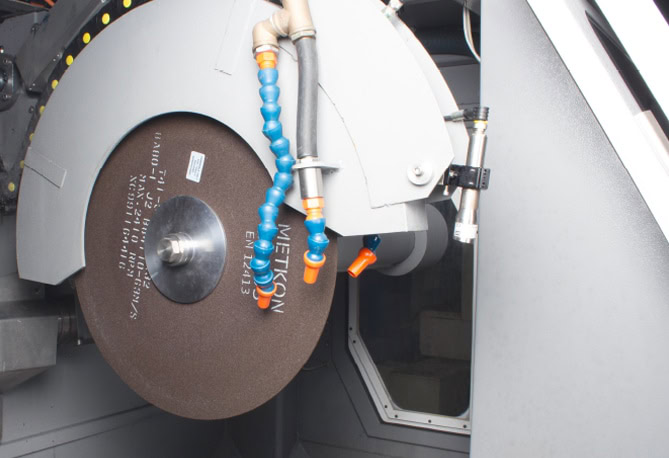
The choice between an abrasive saw and a precision saw can substantially affect your results and budget. Abrasive saws serve as the workhorses of metallurgical sample preparation and stand out for their efficiency and versatility. These powerful tools use cutting wheels that span 10 to 16 inches in diameter. The wheels contain aluminum oxide or silicon carbide particles bound with resin or rubber.
Precision saws take a different approach altogether. Abrasive cutters excel at handling larger specimens, while precision cutoff systems target specific areas with better accuracy. Abrasive cutoff saws work great with tougher materials but just need higher voltage – typically 220V or 480V with 3-phase power. Precision systems use smaller blades that range from 3 to 8 inches with thicknesses between 0.006″ to 0.040″. These precision tools give you variable speeds from 100 to 1000 RPM, and some reach up to 5,000 RPM for specialized materials.
In this piece, we’ll get into how each abrasive metal-cutting disk technology compares in 2026’s economic landscape. This will help you determine which approach cuts costs without sacrificing quality. The right choice matters whether you’re setting up a new lab or upgrading existing equipment. Understanding these key differences will lead to a smart investment.
Cutting Mechanisms and Blade Technology
The cutting mechanisms and blade technology set abrasive cutting and precision cutting apart. Abrasive wheels work through a self-sharpening process. They release grit while spinning to expose fresh cutting surfaces. These wheels range from grade A (softest) to Z (hardest), and their grain sizes vary from 8 (coarsest) to 600 (superfine).
Harder materials need softer abrasive wheels that break down quickly. This constant breakdown reveals new cutting edges. Aluminum oxide works best to cut mild steel, while silicon carbide suits ceramics better.
Diamond and CBN (Cubic Boron Nitride) blades take a different approach in precision cutting. These blades contain tiny particles embedded in a bond matrix that serve as microscopic cutting edges. Diamond’s natural hardness helps these blades last up to 30 times longer than abrasive wheels.
Results vary based on different cutting techniques. Chop cutting, the most common method, loses effectiveness as part sizes grow due to higher loads and less lubrication. Pulse cutting enhances performance by breaking down the abrasive regularly. This process “sharpens” the blade during operation. Planar cutting uses shallow, incremental cuts that reduce contact area and extend wheel life.
Both methods need proper cooling. Abrasive grinding wheels work best at speeds between 5,000-6,500 feet per minute. Dry cutting typically runs at 12,000 SFPM, while wet cutting operates at 8,000 SFPM.
Material Suitability and Sample Integrity
The choice of material plays a vital role in selecting the most effective cutting technique. Abrasive cutting works well with many materials and excels with harder, tougher substances where precision systems face challenges.
Precision cutting delivers better results with glass and ceramics by reducing chipping and edge damage. These brittle materials can easily fracture if not handled properly during cutting. On top of that, hollow glass structures need special approaches to avoid collapse under pressure.
The right clamping techniques are closely associated with sample integrity. Modern clamping devices hold workpieces with precision to ensure exact cutting processes. These special fixtures work well with both standard and irregular sample shapes, which helps maintain consistent operations.
Each metal needs its own cutting approach based on its makeup. Materials with high iron content just need different cutting strategies than aluminum and copper. Precision cutting works best for heat-sensitive materials because materials that don’t conduct heat well can heat up fast during cutting. This can lead to thermal stress and cracking.
Subsurface integrity is another significant factor to think over. High-stress cutting can cause deformation below the surface, which creates microstructural changes that affect how components perform. These subsurface changes might lead to stress corrosion cracking in some alloys.
Cutting Operation of Large EV Drive-Motor Stators — with Servocut 602 AX-R
Comparison Table
| Characteristic | Abrasive Cutting | Precision Cutting |
|---|---|---|
| Blade/Wheel Size | 10-16 inches diameter | 3-8 inches diameter |
| Blade Thickness | Not mentioned | 0.006″ to 0.040″ |
| Operating Speed | 5,000-6,500 feet per minute (standard) 12,000 SFPM (dry cutting) 8,000 SFPM (wet cutting) |
100-1,000 RPM (up to 5,000 RPM for specialized materials) |
| Power Requirements | 220V or 480V with 3-phase power 5-HP (14-inch saws) 25-HP (30-inch saws) |
Not mentioned |
| Blade Material | Aluminum oxide (for mild steel) Silicon carbide (for ceramics) |
Diamond and CBN (Cubic Boron Nitride) |
| Blade Longevity | Shorter life due to self-sharpening process | Up to 30 times longer than abrasive wheels |
| Best Suited Materials | Larger specimens Tougher materials |
Brittle materials (glass, ceramics) Heat-sensitive materials |
| Cutting Mechanism | Self-sharpening process with continuous grit release | Microscopic cutting edges embedded in bond matrix |
| Maintenance Requirements | Daily blade checks Weekly speed calibrations Quarterly reservoir cleaning |
Not mentioned |
To Sum Up
Looking at both cutting technologies, we can see that picking between abrasive and precision cutting comes down to specific needs rather than a catch-all solution. Abrasive cutting works best with larger, tougher specimens but needs more power and costs more to run. Precision cutting, on the other hand, gives better results for brittle materials and keeps samples in better shape when you need microscopic analysis.
The blade’s technology makes a big difference too. Diamond and CBN blades in precision cutting last up to 30 times longer than regular abrasive wheels, which substantially cuts down replacement needs and costs. You’ll have to balance this advantage against the bigger upfront investment these specialized machines need.
Lab managers should think about space use carefully. Benchtop models pack impressive features into small spaces and handle 90% of regular tasks while leaving room for other gear. In spite of that, these space benefits mean nothing if your chosen tech can’t handle your materials properly.
The most budget-friendly plan for 2026 pairs smart equipment choices with good maintenance. Labs that work with different materials might want both technologies. They can save precision cutting for jobs that need perfect samples and use abrasive methods for high-volume work. Without doubt, the real money-saving strategy isn’t picking just one technology—it’s using each where it works best for quality and efficiency.


